
 Print
Print Word
Word PDF
PDF

|
| Name: _________________________ | Period: ___________________ |
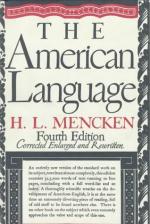
This quiz consists of 5 multiple choice and 5 short answer questions through Chapter 2.3 | Chapter 2.4.
Multiple Choice Questions
1. What is the second characteristic that Mencken attributes to American English in Chapter 1.5?
(a) Disregard of rule and precedent.
(b) Disunity of regional dialects.
(c) Resistance to neologisms.
(d) Translatability to British English.
2. How many dialects dominate American English, according to Chapter 1.5?
(a) Ten.
(b) Two.
(c) Four.
(d) None.
3. How many classifications of Americanisms does Gilbert M. Tucker provide in 1921?
(a) Twenty.
(b) Two.
(c) Twelve.
(d) Thirteen.
4. To what phrase did Benjamin Franklin, Noah Webster, and Robert Southey object as a base Americanism, as discussed in Chapter 2.3?
(a) To advocate.
(b) To indulge.
(c) To process.
(d) Free endorsement.
5. What word in American is used for the English word "shoe?"
(a) Sandal.
(b) Slipper.
(c) Footing.
(d) Boot.
Short Answer Questions
1. Who proposed a generally accepted nomenclature for currency in 1785?
2. Which European language has exerted the most influence on the American language?
3. According to the tale spread by William Gifford, what language was supposed to be substituted for English during the Revolutionary War?
4. Whose clarity of prevision does Mencken praise in the opening of Chapter 1.1?
5. Which defender of Americanisms cited by Mencken in Chapter 1.3 states that "Language is made by the people"?
|
This section contains 200 words (approx. 1 page at 300 words per page) |
|





