
Forgot your password?  
Related Topics

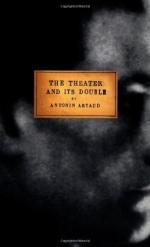
The Theater and Its Double Quiz

This Study Guide consists of approximately 35 pages of chapter summaries, quotes, character analysis, themes, and more - everything you need to sharpen your knowledge of Theatre and its Double.

The Theater and Its Double Quiz

Students: Take our free The Theater and Its Double quiz below, with 25 multiple choice questions that help you test your knowledge. Determine which chapters, themes and styles you already know and what you need to study for your upcoming essay, midterm, or final exam. Take the free quiz now!

Teachers: The BookRags Lesson Plan contains hundreds of test and quiz questions, including multiple choice, short answer, and essay questions. Create your own quiz or test with our automatic test generator, or choose from our ready-to-go chapter quizzes, midterm tests, and final exams. Don’t waste time reinventing the wheel, get the Lesson Plan today!

Directions: Click on the correct answer.

1)

Artaud writes that to "restore [theater] to its original direction, to reinstate it in its religious and metaphysical aspect, is to reconcile it with ______." (from V. Oriental and Occidental Theater)

The religious.
The civilization.
The gods.
The universe.
2)

In what year were Artaud's first poems published in the Mercure de France? (from In Memoriam: Antonin Artaud By Maurice Saillet)

1925.
1922.
1920.
1930.
3)

The biggest obstacle standing in the way of a complete and fundamental renewal of the art of theater is the respect and admiration that we have for the what? (from VI. No More Masterpieces)

Classic texts.
Music.
Actors.
Directors.
4)

Artaud states that in the Oriental theater, forms assume and extend their "sense and their significations on all possible levels; or, if you will, they set up ______ not on a single level, but on every level of the mind at once." (from V. Oriental and Occidental Theater)

Music.
Words.
Gestures.
Vibrations.
5)

Why is the "Theater of Cruelty" considered cruel by Artaud? (from VI. No More Masterpieces)

It aims to redeem mankind.
It resurrects tortured gods.
It attacks the foundation of culture.
Its basis is that of pain.
6)

To what does Artaud compare the ability of the theater's "magical means of art and speech to be exercised organically and altogether"? (from VIII. The Theater of Cruelty (First Manifesto))

Tribal rites.
Renewed exorcisms.
Religious ecstacy.
Entertainment.
7)

How old was Artaud when he died? (from In Memoriam: Antonin Artaud By Maurice Saillet)

36.
48.
40.
52.
8)

When did Artaud join the French Surrealists? (from In Memoriam: Antonin Artaud By Maurice Saillet)

1920.
1919.
1925.
1930.
9)

Artaud intends his theater to to seek in the what of tremendous masses? (from VII. The Theater and Cruelty)

Sensation.
Terror.
Clamoring.
Agitation.
10)

Artaud maintains that since classics texts--what we generally call masterpieces--were made in the past, they are only good for what? (from VI. No More Masterpieces)

The stage.
The museum.
The past.
The future.
11)

Artaud writes in his Second Manifesto that he plans to "renounce the theatrical superstition of the text and the _______ of the writer." (from XI. The Theater of Cruelty (Second Manifesto))

Homage.
Worship.
Leadership.
Dictatorship.
12)

What does Artaud intend to do with the stage in the Theater of Cruelty? (from VIII. The Theater of Cruelty (First Manifesto))

Abolish it.
Put barriers around it.
Raise it.
Light it on fire.
13)

Of what does Artaud say needs not to change before theater is renewed, but the reverse is true? (from VI. No More Masterpieces)

Art.
Civilization.
Religion.
Truth.
14)

The author claims that actors in France no longer "know how to do anything but" what? (from XII. An Affective Athleticism)

Talk.
Stand.
Bore.
Sing.
15)

What does Artaud contend must be seen as as the burning projection of all the objective consequences of "a gesture, word, sound, music, and their combinations"? (from V. Oriental and Occidental Theater)

A play.
An actor.
A scene.
Mise en scene.
16)

In his third letter from "Letters on Language," Artaud states that he never meant for cruelty to be used sporadically, but rather as the _____ of his theater." (from X. Letters on Language)

Foundation.
Property.
Spectacle.
Accoutrement.
17)

Artaud writes of "a seventh state which is beyond breath and which, through the door of the highest ____, the state of Sattva, joins the manifest to the non-manifest." (from XII. An Affective Athleticism)

Guna.
Buddhist.
Shiva.
Hindu.
18)

To whom does the author write his third letter from "Letters on Cruelty"? (from IX. Letters on Cruelty)

Aguste Francois.
Mme. Richeliou.
M.R. de R.
J.P.
19)

What did the performer replicate in the production Artaud speaks of in his second note of "Two Notes"? (from XIII. Two Notes)

A unicorn.
A centaur-horse.
A bear.
A bull.
20)

With whom did Artaud entrust his writing? (from In Memoriam: Antonin Artaud By Maurice Saillet)

Saillet.
Riviere.
Capeau.
Racine.
21)

According to Artaud, "the Theater of Cruelty proposes to resort to a" what? (from VII. The Theater and Cruelty)

Bloodshed of enormous proportions.
Elaborate show.
Ingenius disguise.
Mass spectacle.
22)

In his first letter from "Letters on Language," Artaud writes "It seems, in brief, that the highest possible idea of the theater is one that reconciles us philosophically with _____." (from X. Letters on Language)

Becoming.
Death.
Cruelty.
Life.
23)

How does Artaud claim musical instruments will be treated in the Theater of Cruelty? (from VIII. The Theater of Cruelty (First Manifesto))

As invisible.
As external objects.
As objects and part of the set.
As characters.
24)

In his last letter from "Letters on Language," Artaud says that in fact, the theater he is defining has to assume another _____ in order to function. (from X. Letters on Language)

Definition.
Meaning.
Civilization.
Theme.
25)

Artaud remarks that the problem is that "all true feeling in _____ is untranslatable; translating it would be betraying and dissimulating it." (from V. Oriental and Occidental Theater)

Reality.
Emotions.
God.
Love.
Copyrights
The Theater and Its Double from BookRags and Gale's For Students Series. ©2005-2006 Thomson Gale, a part of the Thomson Corporation. All rights reserved.
Follow Us on Facebook
Homework Help
