
Forgot your password?  

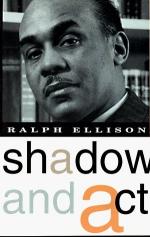
Shadow and Act | Quiz

This Study Guide consists of approximately 130 pages of chapter summaries, quotes, character analysis, themes, and more - everything you need to sharpen your knowledge of Shadow and Act.

Shadow and Act | Quiz

Students: Take our free Shadow and Act quiz below, with 25 multiple choice questions that help you test your knowledge. Determine which chapters, themes and styles you already know and what you need to study for your upcoming essay, midterm, or final exam. Take the free quiz now!

Teachers: The BookRags Lesson Plan contains hundreds of test and quiz questions, including multiple choice, short answer, and essay questions. Create your own quiz or test with our automatic test generator, or choose from our ready-to-go chapter quizzes, midterm tests, and final exams. Don’t waste time reinventing the wheel, get the Lesson Plan today!

Directions: Click on the correct answer.

1)

What writers does Ellison wish had been included in the "Primer for White Folks"? (from Part 1, The Seer and the Seen, Section 6)

Hispanic authors.
More Negro writers.
Young unknown writers.
Major, widely-read American authors.
2)

How did Mrs. Jackson's nephew William die? (from Part 3, The Shadow and the Act, Section 3)

Suicide.
Submarine torpedoes sank the ship he was working on.
Drugs and alcohol.
Hit by enemy fire during a battle in France.
3)

Who is Irving Howe? (from Part 1, The Seer and the Seen, Section 7)

White liberal writer from New York City.
Negro professor from Mississippi University.
Hispanic Indian man who met Ellison in a bar.
Pseudonym for Richard Wright.
4)

Why does Ellison choose to write "Invisible Man" in a non-naturalistic way? (from Part 1, The Seer and the Seen, Section 6)

To bring in supernatural elements.
To be released from expectations.
To be the first Negro writer to write science-fiction.
To capture the fluidity and diversity of America.
5)

Where and when is "The World and The Jug" published? (from Part 1, The Seer and the Seen, Section 7)

Mississippian, 1967 and 1968.
Paris Review, 1966.
New Leader, 1963 and 1964.
New York Times, 1965.
6)

What does Ellison read in 1935 that moves and intrigues him? (from Part 1, The Seer and the Seen, Section 9)

Shakespeare's "Hamlet."
T.S. Eliot's "The Waste Land."
Voltaire's "Moliere."
R. Wright's "Black Boy."
7)

What is unique about "The Way It Is" compared to the other essays? (from Part 3, The Shadow and the Act, Section 3)

Focuses on Negro persons.
Has no humor.
Recommends communism.
Written as a narrative story.
8)

Who pays for Gunnar Myrdal to study the American Negro? (from Part 3, The Shadow and the Act, Section 4)

National Association for the Advancement of Colored People.
Harvard University.
Carnegie Foundation.
Institute for Equality and Sociology.
9)

What is it that widens Ellison's world in a dramatic way? (from Part 1, The Seer and the Seen, Section 8)

Living with a white family.
Traveling abroad.
Athletics.
Reading.
10)

Which American writers is the piece "Black Boys and Native Sons" about? (from Part 1, The Seer and the Seen, Section 7)

Joe Henry, Jules Verne and Thomas Edison.
William Faulkner, Mark Twain and Ernest Hemingway.
Richard Wright, Ralph Ellison and James Baldwin.
Irving Howe, Ralph Ellison and Joe Frasier.
11)

What is Charlie Parker's nickname? (from Part 2, Sound and the Mainstream, Section 3)

Noodle.
Horn.
C.P.
Bird.
12)

What is Ellison reading when he begins writing "Invisible Man?" (from Part 1, The Seer and the Seen, Section 9)

"The Hero" by Lord Raglan.
"Native Son" by Richard Wright.
"The Heart of Darkness" by Joseph Conrad.
"The Problem of Leadership" by Rod Mitchell
13)

Who is Richard Wright to Ellison? (from Part 1, The Seer and the Seen, Section 7)

Spiritual father who nurtured and guided Ellison's writing.
Friend for whose magazine he wrote his first book review and short story.
Source of Ellison's inspiration and success.
Hero and the mentor of all Ellison's work.
14)

What do the blues capture? (from Part 2, Sound and the Mainstream, Section 4)

Tragic and comic sense of the human condition.
Religion of the Negro people.
Personality of the singer.
The time period in which they were written.
15)

That Ellison's first novel might win a prestigious award makes him think what? (from Part 1, The Seer and the Seen, Section 6)

The committee has made a huge mistake.
He is a brilliant writer.
He is chosen only because he is Negro.
There is a crisis in the American novel.
16)

What do people eat at Minton's? (from Part 2, Sound and the Mainstream, Section 2)

Fried chicken, hash, grits, biscuits and hot rolls.
Peanuts and beer.
Hamburgers and hot dogs.
Caviar, champagne and escargot.
17)

Why are slaves able to express themselves in art? (from Part 2, Sound and the Mainstream, Section 4)

They came from African cultures where art was highly functional.
Entertainment was enforced by white culture.
They were given artistic education by slave owners.
Art was seen as harmless by slave owners.
18)

What falls on Ellison and his wife while they sleep? (from Part 2, Sound and the Mainstream, Section 1)

Box of books.
Ceiling.
Tape machine.
Drum set.
19)

What is the original title of the film "The Birth of a Nation?" (from Part 3, The Shadow and the Act, Section 2)

Domination.
The Clansman.
White Pride.
KKK Army.
20)

Where is Gunnar Myrdal from? (from Part 3, The Shadow and the Act, Section 4)

Japan.
Sweden.
Germany.
Hawaii.
21)

Who is Mrs. L.C. McFarland? (from Part 1, The Seer and the Seen, Section 8)

Author of "Bound for Glory Someday".
Woman who would become Ellison's second wife.
Literary critic for the New York Post.
History teacher in Ellison's grade school.
22)

Who are the two primary managers of Minton's? (from Part 2, Sound and the Mainstream, Section 2)

Henry Minton and Teddy Hill.
Henry Minton and Ralph Ellison.
Henry Minton and Louis Armstrong.
Henry Minton and Joey Minton.
23)

Who interviews Ellison in "The Art of Fiction?" (from Part 1, The Seer and the Seen, Section 9)

Gertrude Whittall and T. S. Eliot.
Donald Gibson and Bob Edwards.
Alfred Chester & Vilma Howard.
John Jacob & Nancy Kerry.
24)

Where does Charlie Parker die? (from Part 2, Sound and the Mainstream, Section 2)

Mental hospital.
Alley behind Minton's.
Hotel suite of a Baroness.
Crossing the Atlantic.
25)

What is the occasion of Ellison's speech "Brave Words on a Startling Occasion?" (from Part 1, The Seer and the Seen, Section 6)

Acceptance of the American National Book Award in 1953.
Eldest son's wedding.
Address to the Harvard University graduating class of 1950.
Induction into the American Negro Writer's Hall of Fame.
Copyrights
Shadow and Act from BookRags and Gale's For Students Series. ©2005-2006 Thomson Gale, a part of the Thomson Corporation. All rights reserved.
Follow Us on Facebook
Homework Help
