
Forgot your password?  
Related Topics

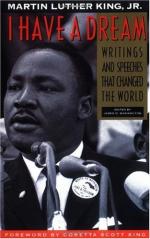
I Have a Dream: Writings and Speeches That Changed the World Quiz

This Study Guide consists of approximately 33 pages of chapter summaries, quotes, character analysis, themes, and more - everything you need to sharpen your knowledge of I Have a Dream.

I Have a Dream: Writings and Speeches That Changed the World Quiz

Students: Take our free I Have a Dream: Writings and Speeches That Changed the World quiz below, with 25 multiple choice questions that help you test your knowledge. Determine which chapters, themes and styles you already know and what you need to study for your upcoming essay, midterm, or final exam. Take the free quiz now!

Teachers: The BookRags Lesson Plan contains hundreds of test and quiz questions, including multiple choice, short answer, and essay questions. Create your own quiz or test with our automatic test generator, or choose from our ready-to-go chapter quizzes, midterm tests, and final exams. Don’t waste time reinventing the wheel, get the Lesson Plan today!

Directions: Click on the correct answer.

1)

When did the Student Nonviolent Coordinating Committee (SNCC) come into being? (from Part 2: Chapter 8- Chapter 10)

December 1-3, 1964.
December 1-3, 1959.
April 15-17, 1965.
April 15-17, 1960.
2)

How old was Dr. King when he was assassinated? (from Part 4: Chapter 18-20)

41.
39.
40.
42.
3)

What was the name of the first African American to challenge interstate travel bans? (from Part 2: Chapter 8- Chapter 10)

T. McCants Stewart.
Stokely Carmichael.
Emmett Till.
Thurgood Marshall.
4)

What major movement followed the Montgomery Bus Boycott and the Sit-In Movement? (from Part 2: Chapter 8- Chapter 10)

Freedom Summer.
March on Washington.
Black Panther Movement.
Freedom Ride.
5)

What were the dates of the demonstration at Rainbow Beach in Chicago? (from Part 2: Chapter 8- Chapter 10)

December 5 and 7, 1961.
August 5 and 9, 1961.
July 9 and 16, 1961.
June 5 and 7, 1961.
6)

What was the name of the march during which Dr. King delivered his "I Have A Dream" speech? (from Part 2: Chapter 11- Part 3: Chapter 15)

March on Washington, D.C. for Equality for All.
March on Washington, D.C. for Civil Rights.
March on Washington, D.C. for the African American Move From Minority.
March on Washington, D.C. for Liberty and Freedom.
7)

On what date were excerpts from the sermon from Chapter 19: "The Drum Major Instinct" played for Dr. King's nationally televised funeral service? (from Part 4: Chapter 18-20)

February 19, 1968.
June 9, 1968.
October 19, 1968.
April 9, 1968.
8)

Where did Dr. King deliver his last sermon? (from Part 4: Chapter 18-20)

A Baptist church.
City Hall.
A Masonic temple.
Town square.
9)

What memorial was the background for Dr. King's "I Have A Dream" speech? (from Part 2: Chapter 11- Part 3: Chapter 15)

Jefferson Memorial.
Washington Monument.
George Mason Memorial.
Lincoln Memorial.
10)

What group organized the first integrated group of interstate travelers? (from Part 2: Chapter 8- Chapter 10)

NAACP.
NUL.
CORE.
MIL.
11)

What did Dr. King's article from Chapter 17: "Black Power Defined" discuss? (from Part 3: Chapter 16- Chapter 17)

African Americans' need to vote.
African American men and their role in the family.
African Americans in the war.
African American nationalism being embraced by the black community.
12)

What was found on a farm near Philadelphia, Mississippi, on August 4, 1964? (from Part 2: Chapter 11- Part 3: Chapter 15)

Three dead bodies of civil rights workers.
Anti-equality propaganda in the form of a barn painting.
A lynched black man.
An unfinished speech written by Dr. King.
13)

What movement involved civil rights activists who sought to challenge religious segregation? (from Part 2: Chapter 8- Chapter 10)

Sit-in.
Pray-in.
Free-ins.
Choice-in.
14)

When did the war between the U.S. and the Soviet Union begin and end? (from Part 4: Chapter 18-20)

1945-1987.
1960-1970.
1955-2000.
1909-1913.
15)

What were the nicknames of the African Americans who traveled from state to state even though they were prohibited from doing so because of white co-passengers? (from Part 2: Chapter 8- Chapter 10)

Challengers.
Riders.
Freedom Challengers.
Freedom Riders.
16)

Where did Dr. King deliver his most historic and controversial statement tying the war and the Civil Rights Movement together? (from Part 3: Chapter 16- Chapter 17)

New York City.
Washington, D.C.
Atlanta.
Memphis.
17)

What was the name of the war primarily between the U.S. and the Soviet Union? (from Part 4: Chapter 18-20)

The Cold War.
The Russian-American War.
The Cold Conflict.
The Russian Conflict.
18)

What percentage of African Americans registered in Alabama voted in Alabama's Democratic Primary? (from Part 2: Chapter 11- Part 3: Chapter 15)

Over 95 percent.
50 percent.
Over 80 percent.
20 percent.
19)

What national convention did Reverend A.D. Williams, Martin Luther King, Sr.'s, maternal grandfather, found? (from Part 4: Chapter 18-20)

National African American Convention.
National Baptist Convention.
National Religious Convention.
National Pastoral Convention.
20)

When did Dr. King deliver his last, and greatest, sermon? (from Part 4: Chapter 18-20)

May 3, 1968.
April 3, 1968.
March 3, 1968.
April 5, 1968.
21)

What work did Dr. King publish, according to Chapter 11 ("I Have A Dream"), when he was considered the "prophet of the hour"? (from Part 2: Chapter 11- Part 3: Chapter 15)

"What Is Your Life's Blueprint?"
"The Three Dimensions of a Complete Life."
"I've Been to the Mountaintop."
"Why We Can't Wait."
22)

Who began to question President Eisenhower's commitment to more troops in Vietnam? (from Part 3: Chapter 16- Chapter 17)

People of conscience.
People in the military.
People outside the United States.
People of color.
23)

What two cities had riots erupt on July 18, 1964? (from Part 2: Chapter 11- Part 3: Chapter 15)

Dallas and St. Louis.
Memphis and Birmingham.
Harlem and Brooklyn.
New York City and Charleston.
24)

At what meeting did Dr. King deliver his most historic and controversial statement tying the war and the Civil Rights Movement together? (from Part 3: Chapter 16- Chapter 17)

Bed-In for Peace at Fairmont.
The UN Charter.
The meeting of the Clergy and Laity Concerned.
Living in Peace meeting.
25)

In Dr. King's "I Have A Dream" speech, what does King say all Americans hold that is signed by the founders of the United States? (from Part 2: Chapter 8- Chapter 10)

A "promissory note."
A "promise of intent."
An "unpaid ticket."
A "lottery ticket."
Copyrights
I Have a Dream: Writings and Speeches That Changed the World from BookRags and Gale's For Students Series. ©2005-2006 Thomson Gale, a part of the Thomson Corporation. All rights reserved.
Follow Us on Facebook
