BookRags.com Literature Guides Literature
Guides
Criticism & Essays Criticism &
Essays
Questions & Answers Questions &
Answers
Lesson Plans Lesson
Plans
My Bibliography Periodic Table U.S. Presidents Shakespeare Sonnet Shake-Up
Research Anything:        
History | Encyclopedias | Films | News | Create a Bibliography | More... Login | Register | Help

Search "Deforestation"

Contents Navigation
 
Not What You Meant?  There are 21 definitions for Removal.

Deforestation

Print-Friendly  Order the PDF version  Order the RTF version
About 2 pages (561 words)
Deforestation Summary

Bookmark and Share Questions on this topic? Just ask!

Weather Modification


When Mark Twain said that everybody talks about the weather, but nobody does anything about it, he was wrong. In fact, the rain falling on his California roof at that moment might have been generated by secret chemicals being diffused into clouds by a hired rainmaker named Charles Hatfield. Hatfield got rich selling rain to farmers in the San Joaquin Valley until he was run out of the state of California by angry San Diegoans who accused him of triggering a flood.

Experiments in rainmaking flourished in the early 1900s in American farmlands where drought meant not only hunger but poverty. A little like snake-oil salesmen, early rainmakers sold their ability to make it rain, but it was always ambiguous: when it worked, they were paid. More often, it was hard to tell if they had performed their promised service. Lawsuits were abundant when rain intended for an arid area fell across the statelines or caused floods, or when barley growers, pressured by beer companies, paid for rain that coincidentally wiped out other crops of neighboring farmers.

Controlling weather raises myriad questions. Is there an accurate scientific way of measuring human intervention in weather? Who is legally responsible if it rains in the wrong place? Does the community feel that augmenting rainfall is good for everyone? If it rains too much, can the rainmaker be sued? How much does local intervention affect global climate? Should regulations be in the hands of the state, the federal government, or a world organization?

For better or worse, people can modify weather both intentionally and inadvertently. Weather responds sensitively to any changes in the global atmosphere because it is a complex collection of energy systems powered by the sun. Modest rises in sea surface temperature in the Atlantic Ocean, for example, brought about by ocean circulation shifts or global warming, suppresses rainfall in the African Sahel and contributes to drought.

Sensitive climate changes are also caused by such human activities as cutting down forests or failing to let farm-fields lie fallow, which, with overgrazing by cattle, sheep, and goats, cause desertification, a condition that results when topsoil blows away and exposes bare, unplantable land. This increases albedo, the reflective quality of the surface of the earth, sends back solar radiation into space, and lowers temperature. With less heat rising, fewer clouds are formed, and rainfall is reduced.

Cities, with their clustered buildings and canyons of thoroughfares, absorb infrared heat and inadvertently modify weather because their shape alters the flow of winds. Because they are localized islands of heat, cities increase cloudiness. Aerosols, or microscopic dust particles, given off in industrial smoke, bond with water vapor and create city haze and smog. When the aerosols contain sulfur dioxide and nitrogen oxides, they cause acid rain. Increased urban traffic raises levels of carbon monoxide and carbon dioxide. In the sky, jet trails contribute to the formation of clouds.

Fossil fuels, which are ancient organic matter, release CO2 when they are burned. This collects in the greenhouse band, a protective shield that circles the earth. Naturally composed of CO2, methane, chlorofluorocarbons (CFCs), nitrous oxide, and water vapor, the greenhouse layer processes infrared heat sent back into space by earth and regulates the temperature of the earth. When it is too full to allow infrared heat from earth to pass through into space, the temperature rises on earth, affecting local, regional, and global weather.

Intentional weather modification involves taking advantage of the energy contained within weather systems and turning it toward a specific goal. To "make" rain, a scientist mimics the natural process by introducing extra water droplets or ice crystals in clouds. However, he needs the right cloud shapes with the right internal temperature and the right winds, headed in the direction of his target.

Rainmaking became a serious science in 1950 when physicist Bernard Vonnegut at General Electric devised a way to vaporize silver iodide to let it rise on heated air currents into clouds where it solidified and bonded onto water droplets to create ice crystals. Previous attempts at rainmaking involved dropping dry ice (solid CO2) onto clouds from planes, but this was expensive. Vonnegut chose silver iodide because its molecular structure most closely matches that of ice crystals.

In California, where the Southern California Edison Company regularly sends out planes to seed rain clouds over the dry San Joaquin Valley farmland, silver iodide is shot from rockets mounted on the leading edge of the wings. It is also vaporized into clouds from ground generators at higher altitudes in the Sierra Mountains. In rainmaking projects, the purpose is to avoid droughts, increase food productivity, and augment water supplies for drinking or hydroelectric plants. But gathering accurate data on successful seeding and subsequent precipitation has been difficult. Currently, most scientists agree with a longterm analysis that seasonal cloud seeding has increased precipitation by at least 10%, possibly as much as 20%. Clouds, which are ever-moving collections of water vapor, regulators of heat, and generators of tremendous internal winds, remain mysterious. Yet they are major players in earth's climate.

Other weather modification projects include dissipating cold fogs, done routinely at major airports around the world. In the former Soviet Union, damaging hailstorms were successfully broken up to protect ripening crops. However, statistics from attempts at hail suppression in the United States have been inconclusive, and research is ongoing. In the 1950s and 1960s, scientists experimented with seeding hurricanes to diminish the storms' severity and alter their path. Similarly, attempts were made to "explode" tornadoes by firing artillery into the oncoming storms. In both cases, natural energies far exceeded any attempts at control.

"We don't have the capability to turn the weather around," said Bill Blackmore of National Oceanic and Atmospheric Administration (NOAA)'s Weather Modification Reporting Program. "If we could modify the weather a hundred percent then we could predict the weather a hundred percent. What we need is a lot more understanding of its complexity."

NOAA funds the Federal State Coop Program, a six-state research group. The Atmospheric Modification Program at NOAA's Wave Propagation Lab in Boulder, Colorado, coordinates and evaluates state projects. Research there and at the Institute for Atmospheric Science at the South Dakota School of Mines and Technology involves doing remote sensing of clouds, computer modelling of clouds, and releasing tracers in convective clouds to better understand the dynamics of thunderstorms.

A new way of collecting rainwater is cloud "milking." Researchers have been collecting fog on the mountains of Chile by stringing 50 nylon mesh nets—39 ft (11.8 m) long by 13 ft (4 m) wide—at regular intervals on the mountainside. As the windblown fogs hit the net, they trap water particles. These are then collected into containers. On average, the system "milks" 2,500 gal (9,475 L) of drinking water a day.

Most rainmaking activities in the United States take place in the western states and are sponsored by water departments or districts and conducted by private and commercial companies. The mistakes made earlier in the history of altering the weather have been dealt with by regulations in each state. Internationally, the World Meteorological Organization (WMO) oversees weather modification, and the Treaty of War and Environmental Weather, signed at the Geneva Arms Limitation Talks in 1977, forbids uncontrolled military weather modification.

In 1971, the United States created Public Law 92-205, which requires states to file all weather modification activity with the NOAA's Weather Modification Reporting Program. Typically, about a dozen states file annually.

Two private organizations, the American Meteorological Society in Boston, Massachusetts, and the Weather Modification Association of Fresno, California, keep records on weather modification. The Journal of Weather Modification is an annual publication of the Institute for Atmospheric Science at the South Dakota School of Mines and Technology.

Deforestation; Greenhouse Effect; Ozone; Ozone Layer Depletion

Resources

Books

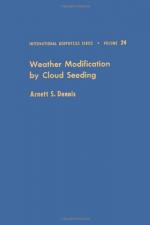
Arnett, D. S. Weather Modification by Cloud Seeding. New York, Academic Press, 1980.

Breuer, G. Weather Modification: Prospects and Problems. New York: Cambridge University Press, 1979.

Periodicals

"Planned and Inadvertent Weather Modification." Bulletin of the American Meteorological Society (March 1992): 331–337.

Strauss, S. "To Catch a Cloud." Technology Review (May-June 1991): 18–19.

Other

Blackmore, W. H. A Summary of Weather Modification Activities Reported in the United States During 1991. Silver Spring, MD: National Oceanic and Atmospheric Administration, 1991.

This is the complete article, containing 1,350 words (approx. 5 pages at 300 words per page).

More Information
  • View Weather Modification Study Pack
  • 21 Alternative Definitions
  • Search Results for "Weather Modification"
  • Add This to Your Bibliography
  • More Products on This Subject
    Deforestation in Africa
    Adam Wood Approximately 90 percent of West Africa's coastal rain forest has disappeared since 1900 ... more

    Deforestation
    Deforestation occurs when the trees in a forested area are cut or destroyed faster than they can re... more


    Ask any question on Deforestation and get it answered FAST!
    Answer questions in BookRags Q&A and earn points toward
    discounted or even FREE Study Guides and other BookRags products!
    Learn more about BookRags Q&A
    Copyrights
    Deforestation from Environmental Encyclopedia. ©2005-2006 Thomson Gale, a part of the Thomson Corporation. All rights reserved.

    Join BookRagslearn moreJoin BookRags


    About BookRags | Customer Service | Report an Error | Terms of Use | Privacy Policy