
 Print
Print Word
Word PDF
PDF|
This section contains 7,060 words (approx. 24 pages at 300 words per page) |

|
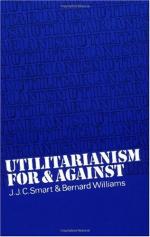
"Utilitarianism" can most generally be described as the doctrine that states that the rightness or wrongness of actions is determined by the goodness and badness of their consequences. This general definition can be made more precise in various ways, according to which we get various species of utilitarianism.
Act and Rule Utilitarianism
The first important division is between "act" utilitarianism and "rule" utilitarianism. If, in the above definition, we understand actions to mean "particular actions," then we are dealing with the form of utilitarianism called act utilitarianism, according to which we assess the rightness or wrongness of each individual action directly by its consequences. If, on the other hand, we understand actions in the above definition to mean "sorts of actions," then we get some sort of rule utilitarianism. The rule utilitarian does not consider the consequences of each particular action but considers the consequences of adopting some...
|
This section contains 7,060 words (approx. 24 pages at 300 words per page) |
|



