United Artists
Founded in 1919 by Douglas Fairbanks, Charlie Chaplin, Mary Pickford, and D.W. Griffith, United Artists (UA) began as a distributor and financier of independent films and their producers; it was not a studio and never had stars under contract. UA was a unique entity in the early history of Hollywood, never losing sight of its goal—to make and distribute quality work.
The idea for United Artists began when Fairbanks, Chaplin, Pickford, and cowboy star William S. Hart were traveling around the country selling Liberty bonds to help the World War I effort in 1918. The four began to discuss the possibility of forming their own company to protect them from rumored studio mergers and the loss of control and salary this might cause. Hart eventually bowed out, but was soon replaced with the world's premier director, D. W. Griffith. When the company was officially formed in February of 1919, many felt that "the idiots had taken over the asylum."
The company was an immediate success. UA brought audiences hits such as Pickford in Pollyanna (1920), Griffith's Broken Blossoms (1919), Fairbanks as Robin Hood (1923), and Chaplin's masterpiece, The Gold Rush (1925). With such quality work, UA's only problem in the early years was providing enough product to meet the demand of the audiences.
UA began courting other stars to have their work distributed through the company. While many declined, some of the top stars of silent films agreed, including Gloria Swanson, Norma Talmadge, and Buster Keaton. The company also brought in Joseph Schenck as a partner and chairman of the board in 1924. He secured producers like Samuel Goldwyn, Walt Disney, and Howard Hughes, all of whom added to the roster of successful films released through UA.
UA was temporarily hurt by the advent of "talking pictures." While initially there were hits such as Coquette (1929), for which Mary Pickford won an Academy Award, as "talkies" became more the rule than the exception, the company found its product in less demand. One notable exception was Hell's Angels (1930), produced by Howard Hughes. After silent screen star Greta Nissen had to be replaced, Hughes introduced to the screen the sex symbol of the 1930s, Jean Harlow. The result made Hell's Angels one of UA's biggest hits.
But UA was beginning to lose some of its creative talent as Griffith, Disney, Schenck, and others left. The company managed, however, to stay afloat with hits such as The Scarlet Pimpernel (1935), Dodsworth (1936), and Algiers (1938). The star founders of UA had all but faded by this time. Griffith was gone, Fairbanks was dead, and Pickford's career was over, although she was still a stockholder in the company. Charlie Chaplin continued to be successful, however, particularly with Modern Times in 1936.
UA fell on hard times in the 1940s. The hits were fewer and more creative forces such as David O. Selznick and Alexander Korda left the company. In 1950 a syndicate led by Arthur Krim and Robert Benjamin took over operations. As the old studio system died, Hollywood changed and the independents, including UA, had the upper hand. The old production code and puritanical limits to motion picture making were also disappearing. One of the first and biggest reasons for this was Otto Preminger's The Moon is Blue (1953). UA released the film without the seal of approval from the Production Code Administration. Despite, or perhaps because of this, the film was a box office and critical success. The 1950s, however, marked the end of an era at UA for another reason. By 1956 founders Chaplin and Pickford gave in to pressure and sold their shares in the company. UA then had a public stock offering in 1957.
Following the public sale of UA, The Apartment (1960) was released and won five Academy Awards, signaling a prosperous time for the studio. In 1961 UA announced what turned out to be a brilliant decision: the company was going to release seven James Bond films, all of which went on to be big hits. The spy series proved to be one of the most successful in motion picture history.
If a motion picture company is to stay afloat, it must, in some way, reflect changes in society. Things were clearly changing with the Vietnam War, the generation gap, and the beginning of the sexual revolution. UA continued its success with violent and controversial hits like The Dirty Dozen (1967) and The Wild Bunch (1969). In the late 1960s, UA experienced the first of many shakeups in ownership when in 1967 Transamerica took over the company. By 1969, millionaire Kirk Kerkorian was the largest shareholder. While UA continued to have hits such as One Flew Over the Cuckoo's Nest (1975), many were not happy with the way the company was being run. In 1978 several executives, including Krim and Benjamin, resigned from the company to form Orion Pictures.
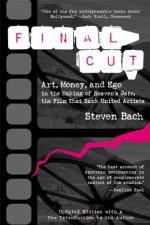
In November of 1980, UA released a film that has become known as the biggest box office disaster in motion picture history—Heaven's Gate —which lost $40 million. In 1981 MGM (Metro-Goldwyn-Mayer) bought UA and it became MGM/UA. The company continued to be sold and resold throughout the 1980s, and in the 1990s it no longer existed in its original form.
Nevertheless, United Artists will be remembered for its part in changing the face of Hollywood, for offering more control to the creative forces of motion pictures and less to the businessmen. In addition to producing many hit films throughout the years, UA is also largely responsible for the way in which the motion picture industry evolved as the studio system began to fade.
Further Reading:
Balio, Tino. United Artists: The Company that Changed Film History. Wisconsin, University of Wisconsin Press, 1987.
Bergan, Ronald. The United Artists Story. New York, Crown, 1986.
This is the complete article, containing 952 words
(approx. 3 pages at 300 words per page).