 Print
Print Word
Word PDF
PDF|
This section contains 6,129 words (approx. 21 pages at 300 words per page) |

|
by Chinua Achebe
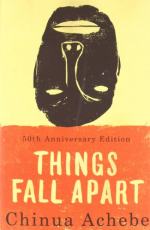
Chinua Achebe was born in 1930 in Ogidi, Anambra State, Nigeria, to an Igbo family of devout Christian parents (Achebe, Morning Yet on Creation Day, p. 65). He attended a mission school for his primary education and the elite Government College, Umuahia, for high school. At age 18 Achebe joined the first set of students admitted to Nigerias premier university, known then as University College, Ibadan, from which he graduated with a degree in English. After college he taught high school before joining the Nigerian Broadcasting Corporation, where he rose to the position of Director of External Broadcasting in charge of foreign services. Along with three other novels by Achebe, Things Fall Apart was published while he was in broadcasting. Since leaving radio, Achebe has been a university professor in Nigeria, the United Kingdom, and the United States. Universities across the globe have...
|
This section contains 6,129 words (approx. 21 pages at 300 words per page) |
|