 Print
Print Word
Word PDF
PDF|
This section contains 3,883 words (approx. 13 pages at 300 words per page) |

|
by Chinua Achebe
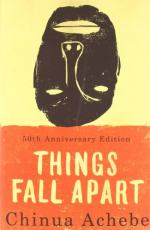
Chinua Achebe was born in 1930 in eastern Nigeria, the son of devout Christian parents. He was baptized Albert Chinualumogu, but dropped this Victorian name when he began his studies. At the university in Nigeria, his frustrations with some of the narrow or distorted portrayals of Africa in European novels (specifically Joyce Cary's Mister Johnson) motivated him to write Things Fall Apart. Also motivating Achebe was a personal reality. After World War II, many Nigerians sought a reconciliation with their past, which they had abandoned for Christianity and the industrialization brought by Europeans to the British colonies in West Africa. Although Achebe had spoken Igbo, not English, as a child, he and his family celebrated Christian, not Igbo, festivals. His writing of Things Fall Apart when he reached manhood was Achebe's "act of atonement with [his] past, the ritual return and homage...
|
This section contains 3,883 words (approx. 13 pages at 300 words per page) |
|