 Print
Print Word
Word PDF
PDF|
This section contains 7,346 words (approx. 25 pages at 300 words per page) |

|
Introduction
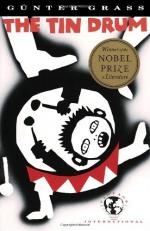
Günter Grass had been struggling as a poet and an artist for several years, getting virtually nowhere in either medium, when he decided to write a novel. Begun in 1956 and published in 1959, his first novel, The Tin Drum, became an instant success in Germany, and shortly thereafter made its author an international sensation. In all likelihood, Grass is the most widely read German-language author to publish after World War II, and The Tin Drum the most widely read postwar German novel.
In this work Grass broke away from the style of earlier German novels about the war. Whereas those books tended to be realistic and uncomplicated indictments of Nazi atrocities, Grass's novel is complex, richly symbolic, and highly ironic. It starts by posing the reader with a problem...
|
This section contains 7,346 words (approx. 25 pages at 300 words per page) |
|