 Print
Print Word
Word PDF
PDF|
This section contains 3,767 words (approx. 13 pages at 300 words per page) |

|
by W. E. B. Du Bois
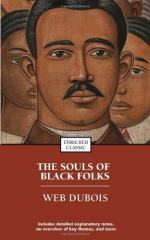
Born in 1868 in the small Massachusetts town of Great Barrington, William Edward Burghardt (known as W. E. B.) Du Bois was physically far removed from the South, where slavery had only recently been abolished. Nevertheless, Du Bois, a superior student and the first African American to earn a Ph.D. from Harvard University, would make it his life's mission to promote true equality for African Americans. The Souls of Black Folk is a collection of fourteen of Du Bois's essays that discuss what emancipation meant to blacks, how contemporary black leadership was going astray, and how difficult it was for blacks to escape slavery's turbulent legacy and obtain equality in white society.
Events in History at the Time of the Essays
Slavery's legacy. Though black slaves in the South had been freed by the...
|
This section contains 3,767 words (approx. 13 pages at 300 words per page) |
|