 Print
Print Word
Word PDF
PDF|
This section contains 6,757 words (approx. 23 pages at 300 words per page) |

|
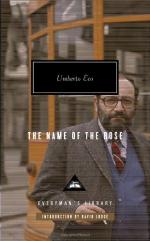
by Umberto Eco
Umberto Eco was born in 1932 in the Italian province of Piedmont. He began his academic career in the 1950s as a medieval scholar but soon became interested in the philosophy of language. Particularly fascinating to Eco were developments in semiology, or the science of signs and signifying systems, a field that draws on linguistics, literary studies, anthropology, and psychology, and concerns the basic structures and principles of human communication. As a result of his work in cultural journalism, especially after writing a book on aesthetics, Opera aperta (1962; The Open Work), Eco became associated with a network of contemporary Italian writers called Gruppo 63, who encouraged formal experimentation and rejected the elegant novels produced by authors like Giuseppe Tomasi di Lampedusa (see The Leopard, also in WLAIT 7: Italian Literature and Its Times). Eco proceeded to write a series of...
|
This section contains 6,757 words (approx. 23 pages at 300 words per page) |
|