 Print
Print Word
Word PDF
PDF|
This section contains 5,766 words (approx. 20 pages at 300 words per page) |

|
by Oscar Hijuelos
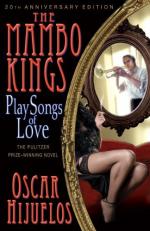
The son of pre-Revolutionary Cuban immigrants, Oscar Hijuelos was born in the Upper West Side of New York City in 1951. He received his Bachelors and Masters degrees at the City College of New York. While his first novel, Our House in the Last World, met with high acclaim but little commercial success, his second novel, The Mambo Kings Play Songs of Love, became an international bestseller, garnered the 1990 Pulitzer Prize, and was adapted into a popular Hollywood film. Focusing on aspects particular to the experience of individual Cuban Americans, the novel manages also to convey universal truths: These two brothers, clothed in flamboyant and elegiac prose, are ordinary human beings with complex inner livesno stereotypes here. . . . [The novel is] about Cubans and music but . . . also . . . about . . . the way that the...
|
This section contains 5,766 words (approx. 20 pages at 300 words per page) |
|