 Print
Print Word
Word PDF
PDF|
This section contains 4,099 words (approx. 14 pages at 300 words per page) |

|
by Lillian Hellman
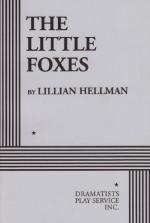
Adramatist, screenwriter, and political agitator, Lillian Hellman was born in New Orleans in 1906 and became one of the nation's most prominent playwrights. Her best work engages the political and sociological questions of the time, from strike-breaking to the power of a well-wrought lie. Her most famous work, The Little Foxes has sometimes been seen as a socialist drama that offers a scathing critique of American capitalism. Portraying a well-bred Southern family that tears itself apart because of money, Hellman's play delivers an eloquent condemnation of racial and class discrimination, and of the dehumanizing effects of greed.
Events in History at the Time the Play Takes Place
The New South. The Little Foxes takes place in what is often referred to as "the New South"- ideally, an American South that emerged from the Civil War reborn, free of its rural poverty...
|
This section contains 4,099 words (approx. 14 pages at 300 words per page) |
|