 Print
Print Word
Word PDF
PDF|
This section contains 3,718 words (approx. 13 pages at 300 words per page) |

|
by Amy Tan
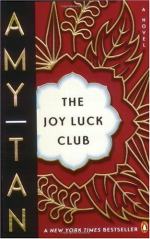
The years following World War II brought a surge in immigration from the Chinese mainland to the West Coast of the United States. This was in part due to the 1943 repeal of the Chinese Exclusion Act, and was later compounded by civil war in China and its eventual communist takeover in 1949. Once in America, many Chinese immigrants families began to produce a generation of American-born children. Amy Tan, born in Oakland, California, in 1952, was part of this wave. She wrote The Joy Luck Club in 1989, by which time Tan was married and had begun to write fictional stories after forgoing a career as a technical writer. Her novel reflects the real-life experiences of postwar Chinese immigrants and their daughters.
Events in History at the Time of the Novel
The Chinese Revolution. By the turn of the twentieth century, China...
|
This section contains 3,718 words (approx. 13 pages at 300 words per page) |
|