 Print
Print Word
Word PDF
PDF|
This section contains 10,015 words (approx. 34 pages at 300 words per page) |

|
Introduction
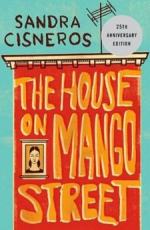
The House on Mango Street by Sandra Cisneros resists classification, with reviewers and critics alike labeling it differently. At one hundred and ten pages, it is about the length of a novella, or short novel, but its pages have more white space than text, and headings frequently divide them. This suggests a collection of stories, though some entries are shorter than one page. Cisneros's use of language causes more questions of classification: it is not only insightful and moving, but evocative and poetic. Maybe, indeed, it is a book of prose poetry.
Ultimately, it fills each of these classifications at different times. Each of the forty-four vignettes (short literary sketches) can stand alone, sentences are often more like verse, and stories combine to give the larger perspective of a novel. In...
|
This section contains 10,015 words (approx. 34 pages at 300 words per page) |
|