 Print
Print Word
Word PDF
PDF|
This section contains 3,474 words (approx. 12 pages at 300 words per page) |

|
by J. R. R. Tolkien
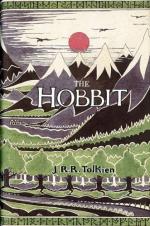
J. R. R. Tolkien was a student of classical and Norse mythology who used his knowledge in these areas to inform his creation of the imaginary land of Middle-earth, the setting for The Hobbit and other works. Tolkien, who hoped to create a mythological past for England, used his imagination to present an account of the European world before the recorded history of humankind. Although The Hobbit was directed primarily at young people, the novel led into the series The Lord of the Rings, a more complex, adult narrative. Because of its mythological trappings, The Hobbit does not adhere to any strict chronological placement in time. The author intended only that the setting evoke images of a time of paganism and chivalry prior to the recorded history of man.
Events in History at the Time the Novel Takes Place
Internal chronology...
|
This section contains 3,474 words (approx. 12 pages at 300 words per page) |
|