 Print
Print Word
Word PDF
PDF|
This section contains 3,912 words (approx. 14 pages at 300 words per page) |

|
by Pearl S. Buck
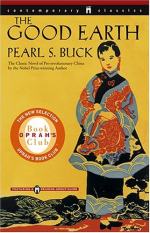
Pearl S. Buck was born in China in 1892, the daughter of American missionary parents. After growing up in rural Chinese communities, Buck was profoundly affected by the difficult cycle of life experienced by China's peasant farmers and their families. Her third novel, The Good Earth, was written in an attempt to show the rigors of Chinese country life and to draw attention to the plight of the majority of China's population. The novel's incredibly poignant depiction of this simple rural life made it an instant success and brought Buck acclaim as one of the world's finest authors.
Events in History at the Time the Novel Takes Place
China's peasant farmers. Chinese civilization has always rested on an agrarian, peasant base. For centuries, between 80 and 90 percent of China's population has consisted of peasant farmers. The lives of these peasants are made...
|
This section contains 3,912 words (approx. 14 pages at 300 words per page) |
|