 Print
Print Word
Word PDF
PDF|
This section contains 8,880 words (approx. 30 pages at 300 words per page) |

|
Introduction
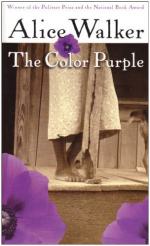
Although she is an accomplished writer of novels, short stories, essays, and poems, Alice Walker is best known for her award-winning novel The Color Purple. It is a story of physical and spiritual survival set in a black community in the rural South of the early twentieth century. While some of the characters must fight the racism and discrimination of the outside world, almost all of them must fight for their individual identities and worth within the black community as well. In turns heartbreaking and triumphant, hopeless and hopeful, The Color Purple examines the struggle and rewards of being true to oneself in an atmosphere of oppression and loss.
The Color Purple is an epistolary novel (a book written as a series of letters), telling the story of Celie, a damaged young woman who is...
|
This section contains 8,880 words (approx. 30 pages at 300 words per page) |
|