 Print
Print Word
Word PDF
PDF|
This section contains 3,145 words (approx. 11 pages at 300 words per page) |

|
by Robert Cormier
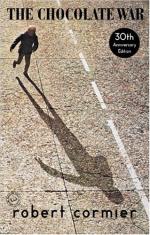
Robert Cormier, born in Leominster, Massachusetts, in 1925, would later raise a family of three daughters and a son there. During his adolescence, Robert Cormier's own son objected to participation in his school's candy sale. While the boy did not suffer the extreme humiliation that the novel's Jerry Renault undergoes, he did feel a certain amount of alienation from his peers. Building on this premise, the elder Cormier created his fourth novel, The Chocolate War, a work that focuses on the sometimes cruel nature of adolescent societies and the consequence of individual choice in a communal world.
Events in History at the Time of the Novel
Adolescents and popular fiction. Although adolescent novels such as The Chocolate War now line the shelves of bookstores and libraries nationwide, young readers did not always have such literature at their disposal. In fact, relative to...
|
This section contains 3,145 words (approx. 11 pages at 300 words per page) |
|