BookRags.com Literature Guides Literature Guides Criticism/Essays Criticism/Essays Biographies Biographies My Bibliography Periodic Table U.S. Presidents Shakespeare Sonnet Shake-Up
Research Anything:        
History | Encyclopedias | Films | News | Create a Bibliography | More... Login | Register | Help
Not What You Meant?  There are 12 definitions for Call of the Wild.  Also try: COTW.


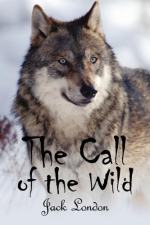
The Call of the Wild

Print-Friendly  Order the PDF version  Order the RTF version
Jack London
About 11 pages (3,177 words)
The Call of the Wild Summary

Bookmark and Share

The Call of the Wild

by Jack London

John Griffith London, the illegitimate son of a freelance philosopher and self-proclaimed Professor of Astrology father and an emotionally distant spiritualist mother, was born January 12, 1876, in San Francisco, California. The boy, later known as Jack, spent much of his childhood working odd jobs to help support his family. After traveling abroad on a seal-hunting ship and tramping across much of the United States, Jack briefly attended the University of California at Berkeley. When news of the gold rush in the Yukon reached him, he packed his bags and left California with thousands of other would-be prospectors to test his mettle in the frozen north. After spending the winter and the spring of 1898 in the Yukon, London had not found an ounce of gold and was suffering the effects of scurvy, a disease brought about by dietary deficiencies. Realizing he was beaten, London returned to California without gold, but with a wealth of experiences and impressions from the Klondike that would soon be captured in the stories and novels for which he became famous. The most successful of these Klondike tales is The Call of the Wild, a novel that propelled London to the forefront of American fiction.

This is a free page. This page contains 201 words. This article contains 3,177 words (approx. 11 pages at 300 words per page).

Read the rest of this Article with our The Call of the Wild Access Pass.

Copyrights
The Call of the Wild from Literature and Its Times. ©2008 Thomson Gale, a part of the Thomson Corporation. All rights reserved.

Join BookRagslearn moreJoin BookRags


About BookRags | Customer Service | Report an Error | Terms of Use | Privacy Policy