BookRags.com Literature Guides Literature
Guides
Criticism & Essays Criticism &
Essays
Questions & Answers Questions &
Answers
Lesson Plans Lesson
Plans
My Bibliography Periodic Table U.S. Presidents Shakespeare Sonnet Shake-Up
Research Anything:        
History | Encyclopedias | Films | News | Create a Bibliography | More... Login | Register | Help

Not What You Meant?  There are 28 definitions for Chi.  Also try: Taiji.

Tai Chi

Print-Friendly  Order the PDF version  Order the RTF version
About 2 pages (734 words)
Tai chi chuan Summary

Bookmark and Share Know this topic well? Help others and get FREE products!

Tai Chi

Tai chi is a Chinese exercise system which uses slow, smooth body movements to achieve a state of relaxation of both body and mind. It can help achieve a state of physical and mental relaxation while also strengthening the cardiovascular system.

As a very slow and gentle form of moving, tai chi has virtually no side effects. However, if a person has any doubts about joints, vertebrae, or heart, a doctor should be consulted.

Developed originally in China as a self-defense strategy, tai chi (the "supreme ultimate fist") is practiced in modern times primarily as a gentle exercise technique. Described as "meditation in motion," the tai chi practitioner performs a series of postures or bodily movements in a slow and graceful manner, with each movement flowing without pause to the next. According to Chinese legend, the technique was created by a Taoist monk who was inspired as he watched a crane and a snake do battle. Impressed by the snake's ability to subtly and swiftly avoid the bird's thrusts, he devised a series of self-defense techniques that don't involve force, but rather stresses evasion, causing the opponent's own momentum to work against him.

Tai chi is an ancient form of exercise that at one point had more than 100 separate movements or postures. Currently there are two popular versions of 18 and 37 movements respectively. In China, 10 million people practice some type of tai chi daily, making it one of the most popular forms of exercise in the world. In the United States, tai chi is learned in classes in which students (or "players," as they are called in China) wear loose, comfortable clothing and either go barefoot or wear only socks or soft shoes. In China, tai chi is almost always practiced outdoors at dawn, and ideally near trees. Unlike other martial arts, tai chi is not competitive. Classes usually begin with a few minutes of standing meditation to calm the mind and gather energy. Following warm-up exercises, students are taught the basics of a particular form or posture. Learning forms is not easy, and it takes some time to master what looks like a simple position. Properly-done postures are done in a relaxed way with the circular and rhythmic movements of one position flowing seamlessly into the next.

While strict attention to body position is critical, proper breathing is considered to be equally important. Just as movements are slow and continuous and without strain, breathing should be effortless yet deep. Finally, both mental and physical balance is considered essential to tai chi. The experienced practitioner of tai chi maintains perfect body balance throughout the exercise series. Altogether, the five essential qualities of tai chi are:

  • Slowness (to develop awareness)
  • Lightness (to make movements flow)
  • Balance (to prevent body strain)
  • Calmness (to maintain continuity)
  • Clarity (to focus the mind)

Tai chi has both physical and mental benefits. If done regularly, it improves muscle tone, flexibility, balance, and coordination. Many older people find that it boosts their energy, stamina, and agility, sharpens their reflexes, and gives an overall sense of well-being. The calming and meditative aspects of tai chi allow many to experience its ability to relieve stress. Some claim tai chi to be a healing therapy, and it is often used to support other treatments for chronic conditions; arthritis and digestive disorders are just two examples. Like yoga, tai chi has several different styles to suit the individual. It can eventually be done daily by an individual, and ultimately becomes a very personal endeavor. Most Westerners find it best to practice tai chi in the same place and at the same time of day, and those who enjoy it most are those who are not seeking major, dramatic breakthroughs, but rather who can take pleasure in small gains that accumulate over a long period of time.

Tai chi is a safe exercise system for people of all ages and fitness levels. Done properly, without any over-stretching, tai chi should not leave a person feeling tired or sore. Besides its overall fitness benefits and stress reduction aspects, regular tai chi sessions are said to be especially helpful for seniors, as it lowers their blood pressure. The practice may help arthritis sufferers and patients recovering from an injury or heart problems. It also improves balance, and reduces the risk of falling, especially important for the elderly. Because of the low stress level of the exercises it is particularly attractive form of exercise to seniors.

This is the complete article, containing 734 words (approx. 2 pages at 300 words per page).

More Information
  • View Tai Chi Study Pack
  • 28 Alternative Definitions
  • Search Results for "Tai Chi"
  • Add This to Your Bibliography
  • More Products on This Subject
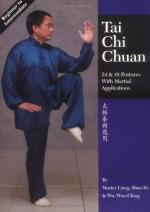
    Tai Chi Chuan
    ancient and distinctive Chinese form of exercise or attack and defense that is popular throughout t... more

    Tai Chi Chuan
    Ancient Chinese form of exercise or of attack and defense. As exercise, it is designed to provide r... more


    Ask any question on Tai chi chuan and get it answered FAST!
    Answer questions in BookRags Q&A and earn points toward
    discounted or even FREE Study Guides and other BookRags products!
    Learn more about BookRags Q&A
    Copyrights
    Tai Chi from World of Health. ©2005-2006 Thomson Gale, a part of the Thomson Corporation. All rights reserved.

    Join BookRagslearn moreJoin BookRags


    About BookRags | Customer Service | Report an Error | Terms of Use | Privacy Policy