 Print
Print Word
Word PDF
PDF|
This section contains 3,421 words (approx. 12 pages at 300 words per page) |

|
by D. H. Lawrence
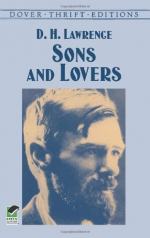
Born in 1885, D. H. (David Herbert) Lawrence grew up during the end of the Victorian age in England. A period of rapid growth, the era was marked by both progress and repression. Industrialism fueled the economy and secondary education became more accessible to the masses, but these benefits were not without cost. Families such as the Lawrences were divided by the rapid changes. While parents often remained in the working class, their educated children rose to the middle and upper classes, creating cultural and economic rifts. Queen Victoria, moreover, promoted a strict "moral" code that advocated sexual abstinence and utterly chaste behavior. As the age came to a close, writers such as D. H. Lawrence and Sigmund Freud began to discuss the taboo subject of sex and to challenge typical Victorian notions of proper male-female relationships. Sons and Lovers examines...
|
This section contains 3,421 words (approx. 12 pages at 300 words per page) |
|