 Print
Print Word
Word PDF
PDF|
This section contains 5,865 words (approx. 20 pages at 300 words per page) |

|
by Toni Morrison
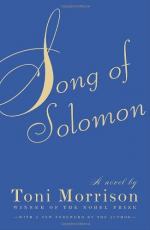
Toni Morrison was born in Lorraine, Ohio, in 1931 as Chloe Anthony Wofford. An avid reader, Morrison studied literature, earning a bachelors degree at Howard University followed by a masters degree in English at Cornell University in 1955. After earning her degrees she worked as an editor for Random House, becoming instrumental in the publication of autobiographies and fiction by African American women such as Angela Davis and Toni Cade Bambara. In 1970 Morrison published her own first novel, The Bluest Eye (also in Literature and Its Times). She followed it with the National Book Award-nominated Sula (1973), and a few years later with Song of Solomon. Using myths and folktales, Song of Solomon details the coming-of-age of a young black man, meanwhile tackling African American issues that emanate from the experience of slavery (displacement, naming, loss of ancestry and homelands). It was...
|
This section contains 5,865 words (approx. 20 pages at 300 words per page) |
|