 Print
Print Word
Word PDF
PDF|
This section contains 2,102 words (approx. 8 pages at 300 words per page) |

|
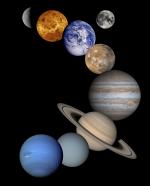
Aristarchus (c. 310 B.C.E.–230 B.C.E.), an ancient Greek mathematician and astronomer, made the first claim that the planets of the solar system orbit the Sun rather than Earth. However, it was Nicolas Copernicus (1473–1543) who would spur modern investigations that would ultimately overthrow the ancient view of a geocentric universe. Johannes Kepler (1571–1630) and Galileo Galilei (1564–1642) initially carried out these investigations. Through the work of Copernicus, Kepler, and Galileo, the geocentric view of circular orbits with constant velocities was gradually replaced by a heliocentric perspective in which planets travel in elliptical orbits of changing velocities. Kepler and Galileo worked during the beginning of what has come to be known as the "Century of Genius," a remarkable time of mathematical and scientific discovery lasting from the early 1600s through the early 1700s. Isaac Newton (1642–1727), perhaps the greatest mathematician...
|
This section contains 2,102 words (approx. 8 pages at 300 words per page) |
|