 Print
Print Word
Word PDF
PDF|
This section contains 4,191 words (approx. 14 pages at 300 words per page) |

|
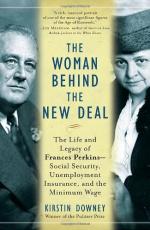
"I see no reason why every child from the day he is born, shouldn't be a member of the social security system. When he begins to grow up, he should know he will have old-age benefits direct from the insurance system to which he will belong all his life. If he is out of work, he gets a benefit. If he is sick, or crippled, he gets a benefit.… Cradle to the grave—from the cradle to the grave they ought to be in a social insurance system." —President Franklin Roosevelt, speaking to Secretary of Labor Frances Perkins.
President Franklin D. Roosevelt (1882–1945; served 1933–45) envisioned a social security program for the people of the United States. He eagerly shared his ideas with his secretary of labor, Frances Perkins (1882–1965), as the process of developing such a program got under way in 1934. The words that open this chapter, relayed...
|
This section contains 4,191 words (approx. 14 pages at 300 words per page) |
|