 Print
Print Word
Word PDF
PDF|
This section contains 4,136 words (approx. 14 pages at 300 words per page) |

|
by Yoko Kawashima Watkins
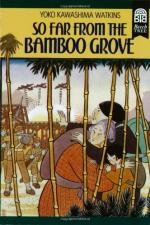
Yoko Kawashima Watkins was born in 1934 in the Japanese-occupied Chinese province of Manchuria. She then spent the first eleven years of her childhood in the northern Korean city of Nanam, where her father worked as a Japanese government official. In 1945, as it became clear that Japan was losing the war against the Allies, angry Koreans sought vengeance against Japanese residents living in their country for decades of Japanese oppression. Yoko fled with her mother and sixteen-year-old sister to Japan. After several months, Yoko's brother arrived there safely too. In 1976 Yoko first questioned her brother about his trek from Nanam all the way to Seoul. He died within weeks of recounting his tale, and it wasn't until 1986 that his sister finished So Far from the Bamboo Grove, the story of their escape from Korea.
Events in History at the Time the Novel Takes Place
|
This section contains 4,136 words (approx. 14 pages at 300 words per page) |
|