 Print
Print Word
Word PDF
PDF|
This section contains 4,258 words (approx. 15 pages at 300 words per page) |

|
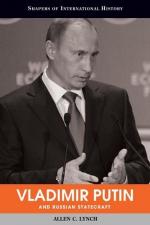
Vladimir Putin
President

(pronounced "vlad-EE-mir POO-teen")
"The building of a democratic state is far from complete. But a great deal has already been done. We must cherish what has been achieved and preserve and advance democracy. We must make sure that the government chosen by the people works in the interests of the people and protects the Russian citizen everywhere, both in our country and abroad, and serves the public."
Russia, officially called the Russian Federation, was by far the largest republic of the former USSR. Its estimated 2002 population of 145 million accounted for slightly more than half the Soviet total. Its 17 million square kilometers (6.6 million square miles) comprised 76% of the territory of the USSR, stretching across Eurasia to the Pacific across 11 time zones. Russia also inherited the lion's share of the natural resources, industrial base, and military assets of the former Soviet...
|
This section contains 4,258 words (approx. 15 pages at 300 words per page) |
|