
BookRags.com Literature Guides Literature
Guides
Criticism & Essays Criticism &
Essays
Questions & Answers Questions &
Answers
Lesson Plans Lesson
Plans
My Bibliography Periodic Table U.S. Presidents Shakespeare Sonnet Shake-Up
Research Anything:        
History | Encyclopedias | Films | News | Create a Bibliography | More... Login | Register | Help


Robert Grosseteste

Print-Friendly  Order the PDF version  Order the RTF version
About 1 pages (409 words)
Robert Grosseteste Summary

Bookmark and Share Questions on this topic? Just ask!

Robert Grosseteste

c. 1175-1253

English Physicist and Philosopher

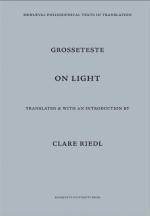
Though he is perhaps best known as the teacher of Roger Bacon (1213-1292), Robert Grosseteste distinguished himself as a scientistin his own right. He wrote on astronomy, discussing comets and advancing a theory of tides. He also presented his own theories concerning light and sound. He described light as the basic substance of the universe and postulated, with considerable accuracy, that sound was a vibrating motion passing through the air.

Grosseteste was born the son of poor parents, and at an early age was forced to earn his own living, at times resorting to begging. The mayor of his hometown, Lincoln, England, eventually recognized his intellectual abilities, and arranged to have him enrolled in school. There he distinguished himself so much that he went on to an academic career that took him successively to the universities of Oxford, Cambridge, and Paris.

In about 1215, Grosseteste was appointed chancellor at Oxford, a position in which he served until 1221. He became the first rector of the Franciscan monks at that institution in 1229 or 1230, then in 1235 received consecration as Bishop of Lincoln. Throughout his remaining career, he distinguished himself for his opposition to abuses of power by both King Henry III and Pope Innocent IV, whom he openly described as "the Antichrist."

Bacon, who studied under Grosseteste in the 1230s, described his teacher as one of the most learned men of his day. Grosseteste excelled in his studies of Greek and Hebrew, and wrote several works on Aristotle (384-322 B.C.).

Starting in about 1215, Grosseteste engaged in a number of scientific studies. Within a decade, he had conducted experiments in optics, using mirrors and lenses, in an attempt to explain the qualities of light in general, and of the rainbow in particular. In 1230, he published De generatione sonorum, his treatise on sound. In it, he advanced his theory of vibrations, which would be corroborated by later studies in the modern era.

As with many men of science during the Middle Ages, Grosseteste's curiosity earned him disapprobation as a suspected magician—a reputation no doubt compounded by his outspoken opposition to church and secular leaders of the day. It was reputed that he had published a study entitled Magick, and that he built a head of brass that could be used for discerning answers to questions and foretelling the future. Not only the scholar Gerbert (a.k.a. Pope Sylvester II, 945-1003) but even Grosseteste's student Bacon, repeated this bizarre tale.

This is the complete article, containing 409 words (approx. 1 page at 300 words per page).

More Information
  • View Robert Grosseteste Study Pack
  • Search Results for "Robert Grosseteste"
  • Add This to Your Bibliography
  • More Products on This Subject
    Robert Grosseteste
    The English churchman and statesman Robert Grosseteste (1175-1253) played an important role in the ... more

    Robert Grosseteste
    Robert Grosseteste was an unusual combination of scientist and theologian, acclaimed by modern theo... more


    Ask any question on Robert Grosseteste and get it answered FAST!
    Answer questions in BookRags Q&A and earn points toward
    discounted or even FREE Study Guides and other BookRags products!
    Learn more about BookRags Q&A
    Copyrights
    Robert Grosseteste from Science and Its Times. ©2005-2006 Thomson Gale, a part of the Thomson Corporation. All rights reserved.

    Join BookRagslearn moreJoin BookRags


    About BookRags | Customer Service | Report an Error | Terms of Use | Privacy Policy

