 Print
Print Word
Word PDF
PDF|
This section contains 4,894 words (approx. 17 pages at 300 words per page) |

|
by William Shakespeare
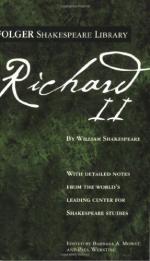
With the exceptions of King John and Henry VIII, Shakespeares English history plays dramatize the century-long story of the Wars of the Roses, the conflict between the two royal houses of Lancaster and York that dominated English politics during the fifteenth century. Shakespeare composed the plays in an order different from that in which the actual events occurred, so that The Tragedy of King Richard II (known simply as Richard II), though written near the middle of the sequence, relates the background from which the struggle arose. The Wars of the Roses were of particular interest in Shakespeares time, not least because they had been ended by Henry VII, the grandfather of the reigning monarch, Queen Elizabeth. Like Shakespeares other history plays, Richard II addresses questions of increasingly urgent importance, since the childless Queen Elizabeth, now in her sixties, remained...
|
This section contains 4,894 words (approx. 17 pages at 300 words per page) |
|