
 Print
Print Word
Word PDF
PDF|
This section contains 3,000 words (approx. 10 pages at 300 words per page) |

|
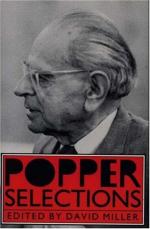
Karl Raimund Popper, the Austrian philosopher of natural and social science, was born in Vienna and was a student of mathematics, physics, and philosophy at the university there. Although he was not a member of the Vienna circle of logical positivists and was in sharp disagreement with many of its doctrines, he shared most of the group's philosophical interests and was in close touch with several of its members, having a considerable influence on Rudolf Carnap. His first book, Logik der Forschung, was published in 1935 in the circle's series Schriften zur wissenschaftlichen Weltauffassung. In 1937 Popper went as senior lecturer to Canterbury University College in Christchurch, New Zealand, and remained there until his move in 1945 to a readership at the London School of Economics in the University of London. From 1949 to 1969 he was professor of logic and scientific method at the London School...
|
This section contains 3,000 words (approx. 10 pages at 300 words per page) |
|



