 Print
Print Word
Word PDF
PDF|
This section contains 1,945 words (approx. 7 pages at 300 words per page) |

|
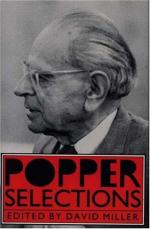
Karl Raimund Popper (1902–1994) was a philosopher of science and politics best known for advancing falsifiability as the criterion for distinguishing science from non-science and for a defense of what he termed the open society. Born in Vienna on July 28, Popper received his Ph.D. in philosophy from the University of Vienna in 1928. After teaching secondary school from 1930 to 1936, he fled the rise of Nazism and the impending Anschluss by emigrating to New Zealand, where he lectured in philosophy at Canterbury University College. In 1946 he moved to England, and three years later became professor at the London School of Economics, which he developed into a leading center for philosophy of science. He was knighted by Queen Elizabeth II in 1965 and elected fellow of the Royal Society in 1976. Popper remained active as a writer and lecturer until his death in Croydon, Surrey, on September 17.
Philosophy of Science
Popper's...
|
This section contains 1,945 words (approx. 7 pages at 300 words per page) |
|