 Print
Print Word
Word PDF
PDF|
This section contains 1,908 words (approx. 7 pages at 300 words per page) |

|
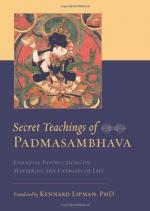
PADMASAMBHAVA, an Indian Tantric adept of the eighth century who became a foremost Tibetan cultural hero, is the subject of greatly elaborated legends and serves as the eponymous source of much of the enormous corpus of revelatory textual "treasures" (gter ma). He remains, however, so obscure to historical research that it has even been proposed that he was an entirely mythical construction who in fact never lived. Though this extreme conclusion seems, in the light of the slim evidence that does exist, to be without merit, it does underscore that here, as with a great many founders of religious traditions, the religious view of the past cannot be readily reconciled with the demands of critical history.
The Legend
According to traditional Tibetan accounts, the emperor Khri Srong lde btsan (Trhi Songdetsen, r. 755–c. 797), sometime after his adoption of Buddhism in 762, resolved to create the first monastic complex, Bsam...
|
This section contains 1,908 words (approx. 7 pages at 300 words per page) |
|