

 Print
Print Word
Word PDF
PDF|
This section contains 1,847 words (approx. 7 pages at 300 words per page) |

|
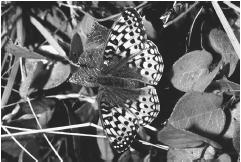 Oregon silverspot butterfly (Speyeria zerene hippolyta). (Photograph by Paul A. Opler. Reproduced by permission.)
Agriculture has changed dramatically since the end of World War II. As a result of new technologies, mechanization, increased chemical use, specialization, and government policies, food and fiber productivity has soared. While some of these changes have led to positive effects, there have been significant costs: topsoil depletion, groundwater contamination, harmful pesticide residue, the decline of family farms, and increasing costs of production.To counterbalance these costs, there is a growing movement to grow plants organically.
On a local level, suburban homeowners and city dwellers are finding ways to plant their own food for personal consumption in plots that are...
|
This section contains 1,847 words (approx. 7 pages at 300 words per page) |
|
More summaries and resources for teaching or studying Organic Gardening and Farming.
Copyrights

Organic Gardening and Farming from Gale. ©2005-2006 Thomson Gale, a part of the Thomson Corporation. All rights reserved.


