BookRags.com Literature Guides Literature
Guides
Criticism & Essays Criticism &
Essays
Questions & Answers Questions &
Answers
Lesson Plans Lesson
Plans
My Bibliography Periodic Table U.S. Presidents Shakespeare Sonnet Shake-Up
Research Anything:        
History | Encyclopedias | Films | News | Create a Bibliography | More... Login | Register | Help

Search "Monroe, James"

Contents Navigation
 

Monroe, James

Print-Friendly  Order the PDF version  Order the RTF version
About 3 pages (893 words)
James Monro Summary

Bookmark and Share Know this topic well? Help others and get FREE products!

Monroe, James

(b. April 28, 1758; d. July 4, 1831) Fifth U.S. president (1817–1825).

James Monroe led a life shaped by war. As a young man he served with distinction in the Continental Army during the War of Independence, and as a two-term president (1817–1825) he avoided potential war with Spain. His most important accomplishment, however, was creating the "era of good feelings," a period of unprecedented unity and nationalism, out of the partisan bitterness left from the War of 1812.

As president, Monroe held two particular distinctions. He was the last of the so-called Virginia Dynasty of presidents, which included such luminaries as the Father of the Nation, George Washington; the author of the Declaration of Independence, Thomas Jefferson; and the framer of the Constitution, James Madison. Monroe was also the "last of the cocked hats," or the last chief executive who was a veteran of the War of Independence. He was a senator, an ambassador, and President Madison's secretary of state as well as acting secretary of war during key moments of the War of 1812.

The War of 1812 ended in peace with the Treaty of Ghent in 1814, yet in 1817, when Monroe became president, the nation still felt its effects. Monroe faced a divided nation torn across political and regional lines, and met it with an elaborate personal tour. Most significant, he visited New England, the seedbed of much partisan opposition, where he met with political rivals. A combination of his humility—paying for his expenses, traveling as a private citizen, wearing simple, Revolutionary-era clothing—and his symbolic acts—visiting key locations from the War of Independence and the War of 1812, honoring veterans, and invoking the memory of George Washington and other past war heroes—made his tour a great success. The unity and nationalism fostered by Monroe's goodwill campaign energized the country's spirit, economy, and expansion.

Monroe also faced other challenges during his tenure in executive office, many of which he inherited from his predecessors. One involved the U.S. military chain of command. General Andrew Jackson, the hero of the Battle of New Orleans during (though technically after) the War of 1812, protested the fact that one of President Madison's cabinet members had issued an order to one of Jackson's inferiors, thus bypassing Jackson. Monroe ably handled the problem with a compromise that spared Jackson's pride but also removed any block to direct orders from Washington, D.C. The situation grew more complicated when Jackson captured Spanish holdings in Pensacola without authorization. Monroe not only managed to avoid hostilities with Spain over Jackson's reckless actions, but also convinced Spain to sell its Florida lands and define boundaries for its remaining territories. The problem could have led to war, but Monroe's solution proved both peaceful and popular.

Monroe also inherited the problem of slavery from earlier presidents. Slaveholding and non-slaveholding representatives were perfectly balanced in the Senate when Missouri, a territory allowing slavery, applied for statehood, threatening to tip that balance. Maine, a northern and non-slaveholding part of Massachusetts, soon applied for statehood as well. Eventually, through the Missouri Compromise, the two territories became states, thus canceling out each other's Senate votes and preserving a fragile balance between the two opposing interests. New law prohibited slavery in territories above Missouri's northern border. The resolution avoided civil war but was only a temporary solution at best, despite Monroe's plea for an end to regional self-interest in politics.

As president, Monroe repositioned the United States on the world stage by creating a policy known as the Monroe Doctrine. Because of the increase of Latin American revolutions against colonial powers and hostilities

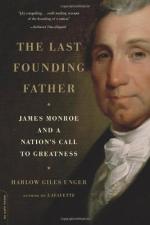
James Monroe.James Monroe.

in Europe that threatened to spill over into other parts of the Western hemisphere, Monroe felt it was time to articulate a clear role for the United States in international affairs. Monroe pledged U.S. neutrality in Europe but explained that European powers could no longer colonize in the Americas. The Monroe Doctrine proclaimed the Western hemisphere a "hands-off zone" that would be protected by the United States.

Other challenges, such as funding internal improvements and building coherent policy toward American Indians, also arose during Monroe's administration. In the final analysis, Monroe avoided war, rethought U.S. foreign policy, erred on the side of compromise when he could, and postponed crises that had no simple solution. With his New England tour, his measured rhetoric, and his command of symbolism, Monroe built unity from a bitter postwar nation, reviving Revolutionary spirit in the unstable aftermath of the War of 1812 and ushering in the "era of good feelings."

Bunker Hill Monument; Jefferson, Thomas; Lafayette's Tour; Madison, James; Monroe's Tour of New England; Supreme Court and War Powers; War of 1812.

Bibliography

Ammon, Harry. James Monroe: The Quest for National Identity. Reprint, Charlottesville: University of Virginia Press, 1990.

Cunningham, Noble E., Jr. The Presidency of James Monroe. Lawrence: University Press of Kansas, 1996.

Dangerfield, George. The Era of Good Feelings. Chicago: Ivan R. Dee, 1989.

Ketchum, Ralph. Presidents above Party: The First American Presidency, 1789–1829. Chapel Hill: University of North Carolina Press, 1984.

Monroe, James. The Papers of James Monroe. Edited by Daniel Preston. Westport, CT: Greenwood Press, 2003.

Sturgis, Amy. Presidents from Washington through Monroe, 1789–1825: Debating the Issues in Pro and Con Primary Documents. Westport, CT: Greenwood Press, 2002.

Internet Resources

"The James Monroe Museum and Memorial Library." Mary Washington College. Available from <http://www.mwc.edu/jmmu> .

Monroe, James. "The Papers of James Monroe." The Avalon Project at Yale Law School. Available from <http://www.yale.edu/lawweb� 3E;.

This is the complete article, containing 893 words (approx. 3 pages at 300 words per page).

More Information
  • View Monroe, James Study Pack
  • Search Results for "Monroe, James"
  • Add This to Your Bibliography
  • More Products on This Subject
    James Monro
    Background Christianity Thomas the Apostle Pantaenus Protestantism Indian history Missions timeline ... more


    Ask any question on James Monro and get it answered FAST!
    Answer questions in BookRags Q&A and earn points toward
    discounted or even FREE Study Guides and other BookRags products!
    Learn more about BookRags Q&A
    Copyrights
    Monroe, James from Americans at War. Copyright © 2001-2006 by Macmillan Reference USA, an imprint of the Gale Group. All rights reserved.

    Join BookRagslearn moreJoin BookRags


    About BookRags | Customer Service | Report an Error | Terms of Use | Privacy Policy