 Print
Print Word
Word PDF
PDF|
This section contains 5,012 words (approx. 17 pages at 300 words per page) |

|
by Athol Fugard
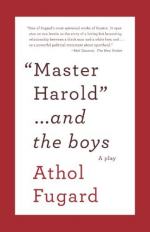
Widely regarded as one of the most significant dramatists of the twentieth century, Athol Fugard (1932) was born in Middleburg, South Africa, to white parents (of English and Afrikaner [Dutch] heritage). His childhood years in Port Elizabeth in the Cape Province would prove to be fertile soil for many of his dramatic responses to the apartheid regime, which dictated racial relations in his native land. Fugards boyhood experiences filtered directly into a series commonly called The Port Elizabeth Plays, which include the semiautobiographical MASTER HAROLD... and the boys, as well as The Blood Knot (1960), Hello and Goodbye (1965), and Boesman and Lena (1969). In Fugards own words, MASTER HAROLD is a play to exorcise [the] personal guilt he felt for failing to challenge the inequalities of the oppressive system of apartheid as a youth...
|
This section contains 5,012 words (approx. 17 pages at 300 words per page) |
|