BookRags.com Literature Guides Literature
Guides
Criticism & Essays Criticism &
Essays
Questions & Answers Questions &
Answers
Lesson Plans Lesson
Plans
My Bibliography Periodic Table U.S. Presidents Shakespeare Sonnet Shake-Up
Research Anything:        
History | Encyclopedias | Films | News | Create a Bibliography | More... Login | Register | Help

Search "Operant Behavior"

Contents Navigation

Operant Behavior

Print-Friendly  Order the PDF version  Order the RTF version
About 5 pages (1,542 words)
Operant behavior Summary

Bookmark and Share Know this topic well? Help others and get FREE products!

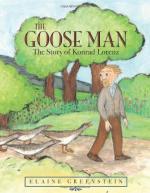
Lorenz, Konrad (1903-1989)

The Austrian zoologist Konrad Lorenz was one of the pioneers of modern ethology, the comparative study of animal behavior. Also noted for his views on aggression, Lorenz was a corecipient of the Nobel Prize for physiology or medicine in 1973.

Konrad Zacharias Lorenz was born November 7, 1903, in Vienna, Austria. By his own account he was fascinated from an early age with keeping and observing animals. He attended Columbia University in New York for one term in 1922, received an M.D. from the University of Vienna in 1928, and was awarded a Ph.D. in zoology by the same university in 1933. His first professional appointment was at theAnatomical Institute in Vienna; he later became professor of psychology at the University of Königsberg.

Konrad Lorenz (AP/WideWorld Photos)Konrad Lorenz (AP/WideWorld Photos)

Lorenz's flirtation with Nazi ideology after the German annexation of Austria in 1938 tarnished his scientific reputation, especially in the United States and Great Britain. In a 1940 paper he mixed Nazi jargon into a discussion of one of his favorite themes, the destructive effects of domestication on animals and humans. Lorenz's ideas sat well with Nazi theoreticians. He later repudiated this paper and acknowledged that it had brought him undeniable discredit.

During World War II Lorenz served as an army physician on the eastern front, where he was captured by Soviet troops. It was as a prisoner of war in Armenia from 1944 to 1948 that Lorenz wrote his first book. The Russian manuscript (published posthumously in 1996) anticipates many of his later ideas on animal behavior, evolution, instinct, and comparative methodology.

In 1958 Lorenz and Erich von Holst cofounded the Max-Planck-Institut für Verhaltensphysiologie at Seewiesen, Germany, where Lorenz remained as director until his retirement in 1973. Following his retirement, the Austrian Academy of Sciences createdthe Institute of Comparative Ethology, based at Lorenz's family home in Altenberg, where he served as director of the department of animal sociology until his death. In 1973 Lorenz, Niko Tinbergen, and Karl von Frisch shared the Nobel Prize in physiology or medicine for their pioneering work in ethology, the scientific study of animal behavior. In addition to his many scientific papers and books, Lorenz reached a wide audience with two popular books, King Solomon's Ring (1952), a reminiscence on the delights of animal study, and the more controversial On Aggression (1966), a discussion of the origins of animal and human aggression.

Lorenz was among the first to insist on the biological roots of animal behavior, asserting that behavior could be described with the same precision and scientific rigor as anatomy. Though this was probably his major contribution to the study of animal behavior, he always acknowledged his debt to two of his predecessors, Oskar Heinroth and Charles O. Whitman. Lorenz further argued that the comparative study of different species can reveal the effects of evolutionary adaptation on behavior. Behavior varies among species because it is shaped by natural selection and shows the influence of the animal's evolutionary history.

Behavior, Lorenz asserted, can be described with the same precision and scientific rigor as anatomy. He further argued that the comparative study of various species can reveal the effects of evolutionary adaptation on behavior, which varies among species because natural selection channels it to distinctive functions in the physical and social environments of different animals.

Lorenz's influence on contemporary research in learning and memory comes from two sources: his work on imprinting and his ideas about the interplay between learned and innate behavior. Imprinting is the formation of a powerful bond between young precocial birds and their parents. Research findings on imprinting, song-learning by birds, and other specialized forms of learning undermined the strict operant reinforcement theories of behaviorism, the school of thought that once dominated American psychology. Building upon Lorenz's pioneering work, later researchers have continued to do important work on the nature of imprinting, its neural basis, and the effects of imprinting on later mate choice.

The second source of Lorenz's influence on current research in learning and memory was his debate with the American psychologist Daniel S. Lehrman during the 1960s on the relative importance of nature and nurture in the development of behavior. Much of Lorenz's scientific work is an analysis of instinctive behavior, which he regarded as the expression of genetically accumulated information—hence animals' capacity for immediate, appropriate, unlearned responses to food, mates, offspring, or predators. Lorenz contrasted such genetically determined responses with learned behavior and regarded behavior as a sequence of learned and innate components. This view was criticized by Lehrman for ignoring important findings about the development of behavior. In his theory of instinct, Lorenz conflated a number of very different ideas about innate behavior, genetics, and evolution. The debate between Lorenz and Lehrman led to a clarification and revision of both positions.

The modern view of animal behavior preserves some of Lorenz's ideas, especially his insistence that functional behavior can occur in the absence of prior relevant experience. It is not correct, however, to regard such behavior as any more "genetic" than anything else that animals do, or to suppose that such behavior is developmentally inflexible. Both genes and the environment can account for differences in behavior, and these two influences interact in their effects on behavior. Less controversy surrounds another of Lorenz's theoretical contributions: his insistence that learning in not simply a matter of open-ended behavioral plasticity but rather consists of evolved rules for acquiring information and modifying behavior.

Lorenz performed little experimental work, preferring to draw on his enormous store of personal observation of animals. Many of his pronouncements on human behavior relied heavily on opinion and intuition. Nevertheless, his compelling insights and persuasive exposition of his ideas brought a new vigor to the scientific study of animal behavior.

Konrad Lorenz died on February 27, 1989, in Altenberg, Austria.

Imprinting; Operant Behavior

Bibliography

Lorenz, K. (1940). Durch Domestikation verursachte Störungen arteigenen Verhalten. Zeitschrift für angewandte Psychologie und Characterkunde 59, 1B81.

—— (1952). King Solomon's ring. London: Methuen.

—— (1965). Evolution and modification of behavior. Chicago: University of Chicago Press.

—— (1966). On aggression. London: Methuen.

—— (1996). The natural science of the human species. An introduction to comparative behavioral research. Cambridge, MA: MIT Press.

Nisbett, A. (1976). Konrad Lorenz. New York: Harcourt Brace Jovanovich.

This is the complete article, containing 1,019 words (approx. 3 pages at 300 words per page).

More Information
  • View Lorenz, Konrad (1903-1989) Study Pack
  • Search Results for "Lorenz, Konrad (1903-1989)"
  • Add This to Your Bibliography
  • More Products on This Subject
    Operant Behavior
    In the 1930s B. F. Skinner developed a new methodology for the study of animal learning and behavio... more

    Operant behavior
    Operant Behavior is the network of factors and events involved in the behavior of animals. The opera... more


    Ask any question on Operant behavior and get it answered FAST!
    Answer questions in BookRags Q&A and earn points toward
    discounted or even FREE Study Guides and other BookRags products!
    Learn more about BookRags Q&A
    Copyrights
    Operant Behavior from Learning & Memory. Copyright © 2001-2006 by Macmillan Reference USA, an imprint of the Gale Group. All rights reserved.

    Join BookRagslearn moreJoin BookRags


    About BookRags | Customer Service | Report an Error | Terms of Use | Privacy Policy