
 Print
Print Word
Word PDF
PDF|
This section contains 17,503 words (approx. 59 pages at 300 words per page) |

|
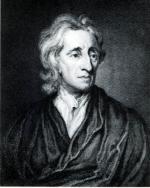
John Locke, English empiricist and moral and political philosopher, was born in Wrington, Somerset. Locke's father, an attorney and for a time a clerk to the justices of the peace in Somerset, fought on the parliamentary side in the first rebellion against Charles I. Locke was reared in a liberal Puritan family and early learned the virtues of temperance, simplicity, and aversion to display. Though his father was severe and remote from him in early youth, as Locke matured they became close friends.
In 1646 Locke entered Westminster School, where he studied the classics, Hebrew, and Arabic. Little time was given at Westminster to science and other studies, and its harsh discipline, rote learning, and excessive emphasis on grammar and languages were later condemned by Locke.
In 1652 Locke was elected to a studentship at Christ's Church, Oxford. He received his BA in 1656 and remained in...
|
This section contains 17,503 words (approx. 59 pages at 300 words per page) |
|



