BookRags.com Literature Guides Literature
Guides
Criticism & Essays Criticism &
Essays
Questions & Answers Questions &
Answers
Lesson Plans Lesson
Plans
My Bibliography Periodic Table U.S. Presidents Shakespeare Sonnet Shake-Up
Research Anything:        
History | Encyclopedias | Films | News | Create a Bibliography | More... Login | Register | Help

Search "Jonas Edward Salk"

Contents Navigation
 

Jonas Edward Salk

Print-Friendly  Order the PDF version  Order the RTF version
About 2 pages (623 words)
Jonas Salk Summary

Bookmark and Share Know this topic well? Help others and get FREE products!

Jonas Edward Salk

1914-1995

American Virologist and Physician

Jonas Salk is best known for his pioneering research on poliomyelitis ("infantile paralysis") and his development of an injectable killed virus vaccine for prevention of the disease. Wide scale testing in 1954 quickly led to the national distribution of the Salk vaccine. Immunization campaigns resulted in a major reduction in the incidence of poliomyelitis in the United States. Work by Salk's rival, Albert Sabin (1906-1993), led to the development of a live attenuated vaccine that could be administered orally.

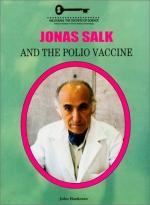
Jonas Salk. (AP/Wide World Photos. Reproduced with permission.)Jonas Salk. (AP/Wide World Photos. Reproduced with permission.)

Salk was born in New York City. He was the oldest son of Russian-Jewish immigrants who encouraged their children to pursue higher educational and professional goals. Salk attended Townsend Harris High School and the City College of New York. His original intention was to study law, but he was attracted to the medical sciences and decided to become a doctor. While a student at the medical school of New York University, Salk began research on the recently discovered influenza virus. This work served as the basis for his later research on the poliovirus and convinced him that he would prefer research to medical practice. He received his medical degree in 1939 and began a two-year internship at Mount Sinai Hospital, New York. He applied to Dr. Thomas Francis, Jr., a respected virologist and epidemiologist, for a research position in his laboratory at the University of Ann Arbor, Michigan. During World War II, Salk worked with Francis on influenza, a problem that was considered significant to the war effort. Salk moved to Ann Arbor in 1942 and spent the next six years working on various was of inactivating the influenza virus and producing a safe and effective vaccine. In 1947 Salk accepted an offer from the University of Pittsburgh Medical School, where he became the only full-time member of the medical school faculty. The Sarah Mellon Scaife Foundation provided funds for renovation of Salk's laboratory. To secure funds for research, Salk applied to the National Foundation for Infantile Paralysis and began research on the poliovirus. The next eight years were devoted to the development of a vaccine against polio.

During the 1950s, poliomyelitis was one of the most feared epidemic childhood diseases, because infection could lead to paralysis or even death. Poliomyelitis is an acute viral infection that can invade the nervous system, but where the disease is common, most infections probably go unnoticed, or result in a mild febrile illness, with sore throat, headache, vomiting, and stiffness of the neck and back. Before the introduction of the polio vaccine, the annual incidence in the United States during certain epidemic years reached over 10,000 paralytic cases. Such epidemics formed the basis of the image of polio as the great crippler of children, and exerted a profound influence on the direction of medical research.

Although the natural history of poliomyelitis was still generally obscure, Albert Sabin had proved that the virus was spread by the fecal-oral route rather than the nasal route. Before Sabin had perfected his oral vaccine, Salk developed a successful killed vaccine that was administered by injection. A nationwide trial of the Salk vaccine in 1954 was successful. The results of the trial were announced in April 1955 and led to widespread acclaim for Salk, who was further lauded for his refusal to patent the vaccine. As a result of the Salk vaccine program, and the efforts of the National Foundation for Infantile Paralysis, the incidence of paralytic polio in the United States decreased dramatically by 1961. In 1963 Salk established the Jonas Salk Institute for Biological Studies in La Jolla, California, to encourage innovative scientific and medical research. During the last years of his life, Salk remained active in research dealing with AIDS.

This is the complete article, containing 623 words (approx. 2 pages at 300 words per page).

More Information
  • View Jonas Edward Salk Study Pack
  • Search Results for "Jonas Edward Salk"
  • Add This to Your Bibliography
  • More Products on This Subject
    Jonas Edward Salk
    The American physician, virologist, and immunologist Jonas Edward Salk (1914-1995) developed the fi... more

    Jonas E. Salk
    Jonas Salk was born in New York, New York, on October 28, 1914. He received his medical degree from... more


    Ask any question on Jonas Salk and get it answered FAST!
    Answer questions in BookRags Q&A and earn points toward
    discounted or even FREE Study Guides and other BookRags products!
    Learn more about BookRags Q&A
    Copyrights
    Jonas Edward Salk from Science and Its Times. ©2005-2006 Thomson Gale, a part of the Thomson Corporation. All rights reserved.

    Join BookRagslearn moreJoin BookRags


    About BookRags | Customer Service | Report an Error | Terms of Use | Privacy Policy