 Print
Print Word
Word PDF
PDF|
This section contains 2,666 words (approx. 9 pages at 300 words per page) |

|
by Katherine Paterson
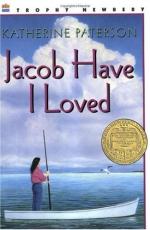
The daughter of Presbyterian missionaries, Katherine Paterson studied religion in college. She relied on her extensive knowledge of biblical tales involving sibling rivalry to create the young adult novel Jacob Have I Loved. Additionally, Paterson attributes her inspiration for the book's Chesapeake Bay setting to William Warner, author of Beautiful Swimmers: Watermen, Crabs, and the Chesapeake Bay. Jacob Have I Loved captures the lifestyle of the fishermen in the Chesapeake Bay, also depicting the types of experiences a teenager such as Paterson's character Louise would have had there during the 1940s.
Events in History at the Time the Novel Takes Place
The fishing industry in Chesapeake Bay. The Chesapeake Bay measures almost exactly two hundred miles from north to south. Located between the harbor at Norfolk, Virginia, and the Chesapeake Delaware Canal, it is the largest inland body of...
|
This section contains 2,666 words (approx. 9 pages at 300 words per page) |
|