 Print
Print Word
Word PDF
PDF|
This section contains 1,599 words (approx. 6 pages at 300 words per page) |

|
Overview
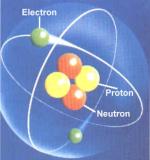
Late in the nineteenth century physicists were working hard to understand the properties of electricity and the nature of matter. Both subjects were transformed by the experiments of J. J. Thomson, who in 1897 showed the existence of the charged particles that came to be known as electrons. Along with the nearly contemporaneous discoveries of radioactivity and x rays, the discovery of the electron focused the attention of scientists on the problem of atomic structure, as well as on ways to put these invisible phenomena to use with inventions such as radio and television.
Background
Joseph John Thomson (1856-1940) spent his professional life at England's Cambridge University, where he passed in four years from prizewinning student (he was ranked second "wrangler" in...
|
This section contains 1,599 words (approx. 6 pages at 300 words per page) |
|