BookRags.com Literature Guides Literature
Guides
Criticism & Essays Criticism &
Essays
Questions & Answers Questions &
Answers
Lesson Plans Lesson
Plans
My Bibliography Periodic Table U.S. Presidents Shakespeare Sonnet Shake-Up
Research Anything:        
History | Encyclopedias | Films | News | Create a Bibliography | More... Login | Register | Help

Not What You Meant?  There are 9 definitions for Rep.  Also try: Intel.

Intel Corporation

Print-Friendly  Order the PDF version  Order the RTF version
About 3 pages (1,013 words)
Intel Corporation Summary

Bookmark and Share Know this topic well? Help others and get FREE products!

Intel Corporation

The Intel Corporation of Santa Clara, California, was founded in 1968 by Robert Noyce (1927–1990), co-inventor of the integrated circuit, and his colleague Gordon Moore (1929–), the originator of "Moore's law." The name Intel was a shortened form of Integrated Electronics. Noyce and Moore were joined by Andy Grove and the three, all formerly from Fairchild Semiconductor, led the firm on its initial mission to produce the world's first semiconductor-based memory chips. The company went on to commercialize the microprocessor, the product that Intel is best known for today.

In 1969 a Japanese manufacturer, Busicom, commissioned Intel engineers to design a set of a dozen custom chips for its new family of scientific calculators. At the time, all logic chips were custom-designed for each customer's product. Logic chips perform calculations and execute programs, unlike memory chips, which store instructions and data.

Intel engineer Marcian "Ted" Hoff improved on Busicom's idea. Instead of designing twelve custom chips, he recommended a set of only four chips for logic and memory, which featured a central processing unit. Although Busicom was satisfied with this alternative approach, Hoff realized its full potential—the design team had created the first general-purpose microprocessor chip, though the term "microprocessor" would not appear for many years.

But, there was a problem. Intel did not own the rights to the new technology—Busicom did. Hoff urged company officials to buy the design from its former client. But others in the company claimed that Intel's future lay in fast and inexpensive memory chips, not in logic chips. Eventually, Hoff's side won by arguing that the success of the new logic chips would enhance the market for memory chips.

Busicom, strapped for cash, agreed to sell the rights for the four-chip set for $60,000. Intel used that agreement as the basis for its microprocessor business, eventually becoming a powerful global corporation. Sales in 2000 reached $33.7 billion.

In 1971, armed with its new technology, Intel engineers introduced the model 4004 microprocessor, which sold for $200 and could perform 60,000 operations per second. It was the size of a thumbnail, featured 2,300 transistors on a sliver of silicon, and could deliver the same amount of computing power as the first electronic computer, ENIAC. In 1972 the model 8008 microprocessor featured 3,500 transistors. Although that was powerful at the time, it was primitive compared to the Pentium IV processor offered in 2000, which had 42 million transistors.

A series of chips followed, each more powerful than the previous one. By 1981 Intel's 16-bit 8086 and 8-bit 8088 processors took the design world by storm, winning an unprecedented 2,500 design awards in a single year. That year, IBM selected the Intel 8088 microprocessor to run its first desktop personal computer, the IBM-PC.

The significance of the IBM alliance was not immediately evident. An Intel sales engineer who worked on the IBM project said, "At the time, a great account was one that generated 10,000 units a year. Nobody comprehended the scale of the PC business would grow to tens of millions of units every year." The success of the IBM-PC helped change the company's direction. In 1986 Intel left the memory-chip market to focus on microprocessors and, under the leadership of Andy Grove who succeeded Moore as CEO in 1987, the company became the world's dominant supplier of microprocessors.

Moore's law, which predicts ever-more complex circuits, drives Intel's designers. By constantly reducing the size of transistors within chips, Intel has reduced their cost. Smaller chips are cheaper because more of them can be made from a single expensive silicon wafer. There are additional benefits. Smaller chips work faster, system reliability is increased, and power requirements are reduced.

To make these tiny chips successfully, Intel's manufacturing technology has had to improve constantly. The earliest chips were made by workers wearing smocks. In 2001 microprocessors are created in a sterile environment, called cleanrooms, which are thousands of times cleaner than those of twenty-five years ago. Robots move the silicon wafers from process toprocess. Operators working in these cleanrooms wear non-linting, anti-static fabric, called bunny suits, with face masks, safety glasses, gloves, shoe coverings, and even special breathing equipment.

Figure 1. Key Intel MicroprocessorsFigure 1. Key Intel Microprocessors

As Intel grew to become the world's largest chipmaker, its dominant market share did not go unnoticed by competitors and the federal government. In 1998 the Federal Trade Commission announced an investigation into allegations of anti-competitive business practices. The company cooperated fully during the nine-month inquiry. The case was settled before it went to court.

Intel continues to explore possible barriers to microprocessor design. In 2000 company engineers demonstrated a 0.13-micron process technology using an ultra tiny transistor gate and the thinnest of thin films. In time, this advance will allow the company to manufacture chips with transistors that are approximately 1/1000th the width of a human hair.

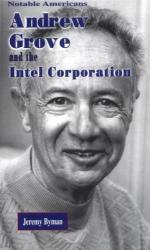
Time magazine named Intel CEO Andy Grove, a Hungarian immigrant born Adras Gróf, as its 1997 Man of the Year as "the person most responsible for the amazing growth in the power and innovative potential of microchips."

Ann McIver McHoes

Apple Computer, Inc.;; Bell Labs; Integrated Circuits; Microchip; Microcomputers; Microsoft Corporation.

Bibliography

Jackson, Tim. Inside Intel, Andy Grove and the Rise of the World's Most Powerful Chip Company. New York: Dutton, 1997.

Ramo, Joshua. "Man of the Year: Andrew W. Grove—A Survivor's Tale." Time, December 29, 1997: 54.

Yu, Albert. Creating the Digital Future. New York: Free Press, 1998.

Internet Resources

Intel Homepage. <http://www.intel.com>

This complete Intel Corporation contains 887 words. This article contains 1,013 words (approx. 3 pages at 300 words per page).

More Information
  • View Intel Corporation Study Pack
  • 9 Alternative Definitions
  • Search Results for "Intel Corporation"
  • Add This to Your Bibliography
  • More Products on This Subject
    Intel Corporation
    American manufacturer of semiconductor computer circuits. Besides microprocessors, the company make... more

    Intel Corp.
    U.S. manufacturer of semiconductor computer circuits. Intel was founded in 1968 as NM Electronics b... more


    Ask any question on Intel Corporation and get it answered FAST!
    Answer questions in BookRags Q&A and earn points toward
    discounted or even FREE Study Guides and other BookRags products!
    Learn more about BookRags Q&A
    Copyrights
    Intel Corporation from Macmillan Science Library: Computer Sciences. Copyright © 2001-2006 by Macmillan Reference USA, an imprint of the Gale Group. All rights reserved.

    Join BookRagslearn moreJoin BookRags


    About BookRags | Customer Service | Report an Error | Terms of Use | Privacy Policy