
BookRags.com Literature Guides Literature
Guides
Criticism & Essays Criticism &
Essays
Questions & Answers Questions &
Answers
Lesson Plans Lesson
Plans
My Bibliography Periodic Table U.S. Presidents Shakespeare Sonnet Shake-Up
Research Anything:        
History | Encyclopedias | Films | News | Create a Bibliography | More... Login | Register | Help


Ibn Khaldūn

Print-Friendly  Order the PDF version  Order the RTF version
About 4 pages (1,315 words)
Ibn Khaldun Summary

Bookmark and Share Know this topic well? Help others and get FREE products!

Ibn KhaldŪn

IBN KHALDŪN (AH 732–808/1332–1406 CE) was a Muslim historian, famous as the first systematic theoretician of the social, economic, psychological, and religious forces that determine human history and society. Born in Tunis into an aristocratic and scholarly family that had left Seville for Northwest Africa almost a century earlier, he received the thorough education customary among the Muslim middle and upper classes. Entering government service shortly after he lost his parents and many of his teachers to the Black Death, he soon left Tunis and in 1354 arrived in Fez, where he was well received by the Marinid ruler but also had to suffer the customary tribulations of political involvement.

The Northwest African period of his life included a sojourn of a little over two years in Andalusian Granada (December 1362–February 1365), during which he undertook a diplomatic mission to Christian Seville, and over three years of quiet retirement from active politics (1375–1378) in rural Qalʿat Ibn Salāmah (province of Oran). There he started work on his great history of the world (Kitāb al-ʿIbar) and completed its "introduction," the Muqaddimah, in 1377. Returning to his native Tunis in order to complete the history, he reentered government service but soon felt that his position at court was shaky. Under the pretext of going on the pilgrimage to Mecca, he left Tunis in October 1382 for Egypt. There he spent the rest of his life as a college professor and administrator and achieved the zenith of his career with an appointment to the prestigious and influential Mālikī judgeship. His religious experience was enlarged by a pilgrimage to Mecca (1387–1388) and, in particular, a visit to the holy cities of Palestine (1400). A meeting with the Mongol ruler Timur in Damascus early in 1401 was another noteworthy event of his Egyptian period. He died unexpectedly in Cairo on March 17, 1406.

Ibn Khaldūn's approach to religion was conditioned by the fact that he lived in a Muslim society and was a prominent member of its religio-juridical establishment. Both as an enormously complex institution and as a powerful religious force in society, Islam is always present in his work and his thought. The encyclopedic outline of Muslim civilization in the Muqaddimah contains brief and factual sketches of the religious sciences and institutions; these sketches are admirably persuasive and have proved useful, for Muslims and non-Muslims alike, as a first introduction to the subject. The historical development of the sciences connected with the Qurʾān, the prophetic traditions (ḥadīth), and jurisprudence is analyzed in a deceptively simple manner, and the great political-theological problems agitating Muslim society, such as the character of the caliphate and the ever present messianic expectations, are discussed astutely.

A matter of vital concern in Ibn Khaldūn's life and time was the religious and social meaning of the relationship of Islam, in its dominant traditional manifestation as a sum of fundamentalist theology and law, to the individual and group emotionality of internalized religion represented by Sufism (taṣawwuf, "mysticism"). He is credited with a legal responsum (fatwā) and historical description and discussion of theories on mysticism, that expands on the chapter devoted to Sufism in the Muqaddimah. He supports traditional Sufism and rejects its ecstatic, seemingly antinomian forms, while being fully aware of their great impact on society. Other supernatural sciences, that were taken very seriously throughout medieval Islam, such as sorcery, astrology, and "scientific" attempts at divining the future, are discussed as to their compatibility with the traditional religious outlook. In general, Ibn Khaldūn applies a sense of realism to his basic concern with the forces governing human society. His approach to the religious/political institutions and religious sciences of Islam is predicated upon the assumption that human rationality, different though it is from revealed religion, affects them as it does all other cultural activity. Even where psychological or supernatural factors appear to be involved, humankind's task is to rely on reason, seconded by observation and experience, for understanding and explaining its world.

This approach raises the question of how Ibn Khaldūn reconciled his views on the normal course of human affairs with the dominant religious traditions and beliefs. The importance of his work results from his remarkable attempt to explain the historical processes in human terms, assumed by him to possess universal validity. Culture, equated with human life, is seen as dependent upon population density, a natural assumption in premodern times possibly confirmed for people in the fourteenth century by the devastation of the Black Death. The innate human psychological need to belong and give political support to a group dominated by one or more leading personalities, for which Ibn Khaldūn chose the code word ʿaṣabīyah, translated approximately as "group feeling," is instrumental in producing the circular ebb and flow of concentrations of political power necessary for all civilization; religious convictions are beneficial, at times even indispensable, for an ʿaṣabīyah to achieve its potential. Economic factors—to a large extent controllable by proper human management, provided that the wisdom and will for it are present—complete the picture of human society, or societies, as based upon reason, numbers, and psychology.

What role, then, belongs to the principal religious tenets of Islam, such as God, prophecy, and the other world? Ibn Khaldūn could not disregard this question. He takes for granted the undeniable reality of the vast metaphysical structure set up by traditional Islam. Although he argues that prophecy cannot be proved by logical means, and he explains prophecy, on the human side, as depending on an extraordinary power of the soul, he accepts as a matter of course the existence of a succession of chosen human beings who are transmitters of the divine message, culminating in the prophet Muḥammad. Metaphysical forces are seen to have exercised a large, and often lasting, influence in certain ages, particularly at the origin of Islam. The potential for divine interference in human affairs at any given time continues to exist. Such interference, however, as in the form of miracles whose occasional occurrence cannot be denied, constitutes an interruption of the ordinary and need not be reckoned with in studying human society and the rules governing it. The widespread speculation about the end of the world concerned him only inasmuch as it was a belief that tended to conflict with political realities. There was practically no need for him to discuss life after death, which he accepted as a powerful belief.

It is tempting to ascribe to Ibn Khaldūn a kind of secularism and even claim for him a tendency to separate religion from politics and sociology. This view is anachronistic and disregards Muslim reality. Ibn Khaldūn was not an original religious thinker, but he showed a deep and no doubt genuine appreciation of the importance of Islam and religion in general. As befitted his position in life, he was sincere in his reverence for traditional Islam and the dogmas and practices it had produced. His individual religious views were not such as to cause much of a stir among his contemporaries, and there was little reason for later generations to pay attention to them. It was his way of looking at history that deeply impressed succeeding historians, especially among the Ottoman Turks. The full significance of his achievement began to find worldwide appreciation in the nineteenth century.

Bibliography

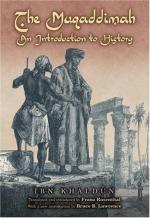
A classified bibliography can be found in Aziz Al-Azmeh's Ibn Khaldûn in Modern Scholarship (London, 1981), pp. 229–318. Among translations of Ibn Khaldūn's works, two are recommended: The Muqaddimah, 3 vols., an English translation by Franz Rosenthal (1958; reprint, Princeton, N.J., 1980), and Le voyage d'Occident et d'Orient, a French translation of the Autobiography by Abdesselam Cheddadi (Paris, 1980).

A good introduction to the thought of Ibn Khaldūn remains Muhsin Mahdi's Ibn Khaldûn's Philosophy of History (London, 1957). While there are numerous studies of his sociological, philosophical, and historical thought, few are devoted to the specifically religious aspects of his work; among them is Ignacio Saadé's El pensamiento religioso de Ibn Jaldûn (Madrid, 1973).

This is the complete article, containing 1,315 words (approx. 4 pages at 300 words per page).

More Information
  • View Ibn Khaldūn Study Pack
  • Search Results for "Ibn Khaldūn"
  • Add This to Your Bibliography
  • More Products on This Subject
    Abd al-Rahman ibn Muhammad ibn Khaldun
    Abd al-Rahman ibn Muhammad ibn Khaldun (1332-1406) was an Arab historian, philosopher, and statesma... more

    Abdel Rahman Ibd-Khaldun
    Abdel Rahman Ibd-Khaldun (1332-1406) was a scholar, teacher, political advisor and activist in nort... more


    Ask any question on Ibn Khaldun and get it answered FAST!
    Answer questions in BookRags Q&A and earn points toward
    discounted or even FREE Study Guides and other BookRags products!
    Learn more about BookRags Q&A
    Copyrights
    Ibn Khaldūn from Encyclopedia of Religion. Copyright © 2001-2006 by Macmillan Reference USA, an imprint of the Gale Group. All rights reserved.

    Join BookRagslearn moreJoin BookRags


    About BookRags | Customer Service | Report an Error | Terms of Use | Privacy Policy

