 Print
Print Word
Word PDF
PDF|
This section contains 4,502 words (approx. 16 pages at 300 words per page) |

|
by Martin Luther King, Jr.
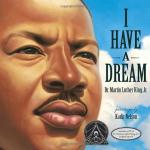
Martin Luther King, Jr., (1929-1968) accepted his first position as pastor of a Baptist congregation in Montgomery, Alabama, in 1954, after receiving his doctorate in philosophy from Boston University. A year later he rose to national fame by advocating nonviolent civil disobedience in his organization of a successful boycott of Montgomery's segregated buses. King, determined to advance black equality in the United States, soon became the de facto leader of the new civil rights era, and proceeded to travel, write books, and deliver speeches for this cause. He delivered his climactic "I Have a Dream" speech before a crowd of more than 200,000 onlookers, 60,000 of whom were white. King's speech inspired a wide audience, galvanizing many to believe in the dream of racial equality. On this historic occasion, the civil rights movement was transformed from a Southern regional struggle...
|
This section contains 4,502 words (approx. 16 pages at 300 words per page) |
|