 Print
Print Word
Word PDF
PDF|
This section contains 9,342 words (approx. 32 pages at 300 words per page) |

|
Introduction
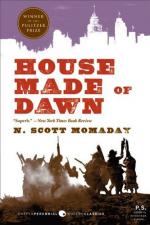
A powerful look at the alienation one Native American experiences, House Made of Dawn (1968) is regarded as the beginning of the Native American renaissance in literature. The first novel by highly regarded Native American author N. Scott Momaday, House Made of Dawn surprised everyone when it won the Pulitzer Prize for fiction in 1969. This marked the first time an American Indian was given this award. Momaday did not believe it initially when he was called with the news, and even the publisher had forgotten it had published the novel.
Momaday began writing what became House Made of Dawn several years earlier as a series of poems. It gradually evolved into stories, before being published as a novel in 1968. Momaday had previously published excerpts in the Southern Review, New Mexico Quarterly, and...
|
This section contains 9,342 words (approx. 32 pages at 300 words per page) |
|