BookRags.com Literature Guides Literature
Guides
Criticism & Essays Criticism &
Essays
Questions & Answers Questions &
Answers
Lesson Plans Lesson
Plans
My Bibliography Periodic Table U.S. Presidents Shakespeare Sonnet Shake-Up
Research Anything:        
History | Encyclopedias | Films | News | Create a Bibliography | More... Login | Register | Help

Not What You Meant?  There are 26 definitions for Hopper.

Hopper, Edward (1882-1967)

Print-Friendly  Order the PDF version  Order the RTF version
About 2 pages (695 words)
Edward Hopper Summary

Bookmark and Share Questions on this topic? Just ask!

Hopper, Edward (1882-1967)

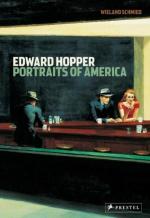
Born in 1882 in Nyack, New York, Edward Hopper developed a style of realist painting that art critic Rolf Günter Renner suggests revealed the limits that humanity and nature impose on each other. This tension is put into sharp relief in one of Hopper's best known paintings, Gas, 1940, which shows a lone attendant checking the pumps at a Mobil gas station bordered by woods. Hopper is perhaps most widely recognized for his Nighthawks (1942), a painting of two men and a woman late at night in a diner, which entered the popular realm as a poster, "Boulevard of Broken Dreams," with the men transformed to James Dean and Humphrey Bogart, the counterman to Elvis Presley, and the woman to Marilyn Monroe. Hopper's figures in this and other paintings displayed an edginess and detachment from the moment, possibly in search of something grander. The poster commodified this alienation through the figures of tragic, troubled movie stars.

Hopper studied illustration at a commercial art school for two years before switching to the New York School of Art in 1901. There, he worked most closely with Robert Henri, a member of the Ashcan School. Hopper's studies of people seem to build on the urban gaze of Ashcan School painter John Sloan, whose etchings hovered between reportage and voyeurism. Hopper travelled to Europe three times between 1906 and 1910. Thereafter, he settled in New York City and summered at South Truro near Cape Cod with his wife Josephine (Jo) Verstille Nivison, whom he married in 1924.

Until the mid-1920s Hopper worked as a commercial artist. In 1925 he painted House by the Railroad. The painting captured Hopper's themes of loneliness, detachment, and alienation. Hopper said his goal was "to achieve the best possible realization of my most intimate impressions of my surroundings." According to Gail Levin, Hopper's biographer, the eerie mood of this painting led to it being used as a model for the house in Alfred Hitchcock's 1960 film Psycho.

The German filmmaker Wolfgang Hastert has suggested that Hopper's paintings are like storyboards for films. In a short film on the painter he drew comparisons to Hopper's work and films such as Paris, Texas, by Wim Wenders, and Blue Velvet by David Lynch. The brooding nature of Hopper's work lends itself to such comparisons and his use of light and shadow could be compared to the technical dimensions of film noir. One reason Hopper's work draws such analogies is that much of it deals self-consciously with the process of looking. In many of Hopper's paintings, the field of sight is clearly from the outside looking in or the inside looking out. For instance, in Office in a Small City (1953), Hopper lets us look from the outside at a man at work, and simultaneously, at the vision before that man from his office window.

Edward HopperEdward Hopper

Hopper's wife Jo was a constant presence in his life and paintings. The photographer Arnold Newman has suggested that his 1960 photograph of Hopper at South Truro, in which Jo dances in the distant background while Hopper grimaces at the camera, is indicative of their relationship, with Jo always in the background. But Jo was a constant figure in Hopper's paintings and Renner suggests paintings such as Girlie Show (1941), New York Movie (1939), Summertime (1943), and Western Motel (1957)—all of which feature a woman similar in appearance to Jo—reveal a sexual tension, perhaps unfulfilled desire, in Hopper's work. Renner further suggests that New York Office (1962), in which a woman is framed in light through a large office window, shows Hopper finally realizing sexual fantasies by dominating the female figure through the act of painting.

The initial attraction of Hopper's paintings for many might well be a surface appeal to an idealized American past. The paintings, however, retain their allure because they stretch the imagination beyond their initial appeal into often forgotten realms of American life.

Further Reading:

Goodrich, Lloyd. Edward Hopper. New York, H. N. Abrams, 1971.

Hastert, Wolfgang. Edward Hopper: The Silent Witness (film). West Long Branch, New Jersey, Kultur International Films, 1994.

Levin, Gail. Edward Hopper: An Intimate Biography. New York, Knopf, 1995.

Renner, Rolf Günter. Edward Hopper, 1882-1967: Transformation of the Real. Cologne, Taschen, 1993.

This is the complete article, containing 695 words (approx. 2 pages at 300 words per page).

More Information
  • View Hopper, Edward (1882-1967) Study Pack
  • 26 Alternative Definitions
  • Search Results for "Hopper, Edward (1882-1967)"
  • Add This to Your Bibliography
  • More Products on This Subject
    Edward Hopper
    A pioneer in picturing the 20th-century American scene, Edward Hopper (1882-1967) was a realist who... more

    Edward Hopper
    Edward Hopper was one of the quieter revolutionaries of twentieth-century American painting. He use... more


    Ask any question on Edward Hopper and get it answered FAST!
    Answer questions in BookRags Q&A and earn points toward
    discounted or even FREE Study Guides and other BookRags products!
    Learn more about BookRags Q&A
    Copyrights
    Hopper, Edward (1882-1967) from St. James Encyclopedia of Popular Culture. ©2005-2006 Thomson Gale, a part of the Thomson Corporation. All rights reserved.

    Join BookRagslearn moreJoin BookRags


    About BookRags | Customer Service | Report an Error | Terms of Use | Privacy Policy