 Print
Print Word
Word PDF
PDF|
This section contains 9,071 words (approx. 31 pages at 300 words per page) |

|
Introduction
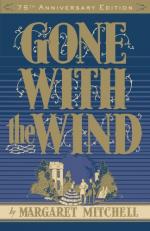
Margaret Mitchell's 1936 novel Gone with the Wind is an epic tale of the American Civil War. It is the story of Scarlett O'Hara, the daughter of wealthy Georgian plantation owners, who must overcome incredible adversity during and after the war. As she transforms from a selfish teenage girl into a confident woman, the United States undergoes a similar transformation, changing from a divided nation at war with itself into a unified country striving to heal from the wounds of a protracted battle. This novel has been translated into dozens of languages; it offers a tale that continues to resonate for contemporary readers, describing lovers and would-be lovers caught between Confederate slave-owners and Union abolitionists.
Gone with the Wind focuses on an array of white male characters. These range from enthusiastic young men like...
|
This section contains 9,071 words (approx. 31 pages at 300 words per page) |
|