 Print
Print Word
Word PDF
PDF|
This section contains 1,628 words (approx. 6 pages at 300 words per page) |

|
Genes are functional units of DNA that contain the instructions for making proteins or RNA. Genes also act as units of heredity, transferring the same instructions from parent to offspring. The nature, structure, and regulation of genes has been a central topic of scientific research for more than 100 years.
History of the Gene and Structure of Dna
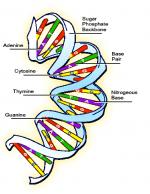
Genes were first defined as units of hereditary transmission. The name "gene" was coined by Wilhelm Johannsen in 1909, although the concept of a discrete unit governing inherited characteristics goes back at least to Gregor Mendel in 1861. The work of Thomas Hunt Morgan and his colleagues established that genes were located on chromosomes, and in the mid-1940s Oswald Avery demonstrated that genes were composed of DNA (deoxyribonucleic acid). Since that time, some types of viruses have been discovered that use ribonucleic acid (RNA) instead of DNA, but here we shall concentrate...
|
This section contains 1,628 words (approx. 6 pages at 300 words per page) |
|