 Print
Print Word
Word PDF
PDF|
This section contains 2,394 words (approx. 8 pages at 300 words per page) |

|
Born February 1818?
Tolbert County, Maryland
Died February 20, 1895
Washington, D.C.
Abolitionist, writer, and speaker
Escaped from slavery to become one of the most
prominent activists in the antislavery movement
 "This war with the slaveholders can never be brought to a desirable termination until slavery, the guilty cause of all our national troubles, has been totally and forever abolished."
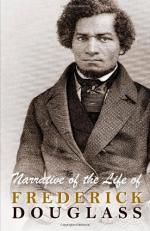
Frederick Douglass. (Courtesy of the Library of Congress.)
Frederick Douglass began his life as a slave. After escaping to the North in 1838, Douglass became a leading figure in the fight to abolish (put an end to) slavery in the United States and gain equal rights for black Americans. He was an accomplished writer and speaker who used the power of words to convince people that slavery was wrong. He was one of the country's first great black leaders.
Born a Slave
Frederick Douglass was born in Tolbert County...
|
This section contains 2,394 words (approx. 8 pages at 300 words per page) |
|