BookRags.com Literature Guides Literature
Guides
Criticism & Essays Criticism &
Essays
Questions & Answers Questions &
Answers
Lesson Plans Lesson
Plans
My Bibliography Periodic Table U.S. Presidents Shakespeare Sonnet Shake-Up
Research Anything:        
History | Encyclopedias | Films | News | Create a Bibliography | More... Login | Register | Help

Not What You Meant?  There are 14 definitions for Benjamin Franklin.  Also try: Franklin County or Jack of all trades.

Franklin, Benjamin

Print-Friendly  Order the PDF version  Order the RTF version
About 3 pages (924 words)
Benjamin Franklin Summary

Bookmark and Share Know this topic well? Help others and get FREE products!

Franklin, Benjamin

(b. January 17, 1706; d. April 17, 1790) Printer and publisher, scientist and inventor, ambassador and statesman, politician.

Benjamin Franklin's impact on America's independence movement and its aftermath cannot be overstated. Franklin fled Boston, the city of his birth, at age seventeen. In Philadelphia, after many false starts, he set up a flourishing printer's shop on Market Street and married Deborah Read, retiring at age forty-two. With his son William, he conducted his famous kite experiment demonstrating the connection between lightning and electricity, which immediately garnered him international fame as a scientist. He also began his political career by winning a seat as Philadelphia's representative to the Pennsylvania legislature. He organized the colony's militia at the beginning of King George's War, presented his abortive "Plan of Union" to the Albany Conference in 1754, and spearheaded the drive for Pennsylvania to become a royal colony. The effort to throw off the proprietary yoke of the Penn family brought Franklin to England in 1757 and again in 1764. He remained there until 1775, when it became clear to him that the destiny of the colonies lay in independence.

At the age of seventy, Benjamin Franklin was one of America's most vociferous supporters of independence even though he had once been a staunch defender of the monarchy. A true "empire man," Franklin was proud of his heritage and had been eager to serve the Crown. He helped his son obtain an appointment as New Jersey's royal governor, and sought a Crown appointment for himself. While he was convinced that England would one day need the vast and wealthy colonies more than the colonies would need England, he did not imagine that America would be impelled to sever its connection to the mother country. During the Stamp Act crisis of 1765, Franklin was temporarily caught off guard by the violent reaction in the colonies to parliamentary taxation. If he was slow to recognize the implications of the Stamp Act, he quickly landed on his feet, and worked to persuade the new Rockingham ministry to repeal the legislation in 1766.

He still continued to occupy the middle ground. He became the colonial agent for New Jersey, Georgia, and Massachusetts, representing American interests in London, and explaining England's unpopular decisions to the colonies. But each parliamentary effort to tax the colonies and to place Americans in a subordinate position alienated him a little more. With the crisis engendered by the Boston Tea Party in 1773, Franklin determined that the chances for the imperial unity for which he had fought no longer existed.

In 1775, Franklin returned home a widower, determined to represent Pennsylvania in the second Continental Congress, and to persuade his reluctant compatriots to sever their ties to England. His son, William, opposed independence. No patriot would have blamed Franklin had he decided merely to retire from public affairs. Instead, he became an indefatigable member of the "radical" contingent of rebellious Americans. Franklin was one of five men appointed by the Continental Congress to write what became known as the Declaration of Independence. If Thomas Jefferson was the scribe, Franklin was the diplomat, soothing the ruffled egos of the contentious committee members.

With independence declared and the war against England begun in earnest, Franklin once more embarked for Europe, serving as the Continental Congress's ambassador to the court of Louis XVI. If it is true that America could not have defeated England without French aid, it is possible that such assistance would not have materialized without Franklin's efforts. He was not America's only representative in France, of course. Silas Deane, John Adams, and Arthur Lee did their part, but none of these men were as successful as Franklin. He

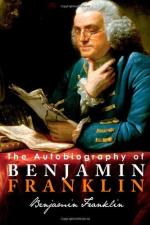
Benjamin Franklin in a painting by Joseph Duplesses. THE LIBRARY OF CONGRESSBenjamin Franklin in a painting by Joseph Duplesses. THE LIBRARY OF CONGRESS

used his fame as the man who brought the lightning from the skies to become a court favorite. He catered to the French, appealing to their hardheaded desire to humiliate the English and to their romantic fascination with "republican America." While he was often exasperated by his fellow ambassadors (and they by him), he controlled his anger. After the news of America's victory at Saratoga, he persuaded the French to enter the war on the side of the former colonies.

Franklin remained in France until the war's end. After Yorktown, he, John Jay, and John Adams sat down with the British to discuss the terms for peace. With the Peace of Paris ratified in 1783, Franklin finally returned home.

Even then, he continued to serve his country. At the age of eighty-one, he was America's oldest delegate to the Constitutional Convention, which met in Philadelphia in 1787. While his substantive contributions to the body were few, he constantly drew the delegates' attention to the "republican" principles of 1776. His colleagues usually rejected his suggestions, but few could simply ignore the words of a man who had helped launch America's existence as an independent nation. After his death, Franklin, the Legendary Revolutionary, soon became an icon that symbolized the genius of the new American society.

Adams, John; Jefferson, Thomas; Madison, James; Monroe, James; Peace of Paris 1763; Sons of Liberty; Washington, George.

Bibliography

Lopez, Claude Anne, and Herbert, Eugenia W. The Private Franklin: The Man and His Family. New York: Norton, 1975.

Middlekauff, Robert. Benjamin Franklin and His Enemies. Berkeley: University of California Press, 1996.

Morgan, Edmund Sears. Benjamin Franklin. New Haven, CT: Yale University Press, 2002.

Newcomb, Benjamin H. Franklin and Galloway: A Political Partnership. New Haven, CT: Yale University Press, 1972.

Van Doren, Carl. Benjamin Franklin. New York: Viking Press, 1938.

Wright, Esmond. Franklin of Philadelphia. Cambridge, MA: Harvard University Press, 1986.

This is the complete article, containing 924 words (approx. 3 pages at 300 words per page).

More Information
  • View Franklin, Benjamin Study Pack
  • 14 Alternative Definitions
  • Search Results for "Franklin, Benjamin"
  • Add This to Your Bibliography
  • More Products on This Subject
    Benjamin Franklin
    As author of one of the most famous autobiographies ever written and publisher of the Poor Richard ... more

    Benjamin Franklin
    Benjamin Franklin (1706-1790) was a leader of America's Revolutionary generation. His character and... more


    Ask any question on Benjamin Franklin and get it answered FAST!
    Answer questions in BookRags Q&A and earn points toward
    discounted or even FREE Study Guides and other BookRags products!
    Learn more about BookRags Q&A
    Copyrights
    Franklin, Benjamin from Americans at War. Copyright © 2001-2006 by Macmillan Reference USA, an imprint of the Gale Group. All rights reserved.


    Join BookRagslearn moreJoin BookRags


    About BookRags | Customer Service | Report an Error | Terms of Use | Privacy Policy